
Understanding the Importance of Time on Market in Real Estate

Time on Market measures how long a property is listed for sale before being sold or delisted, revealing market liquidity, property desirability and whether asking prices are realistic. This key performance indicator helps estate agents, brokers, investors and developers time their approaches to private sellers, negotiate asking prices effectively and refine their listing strategies for optimum performance across dynamic real estate markets.
What Time on Market tells us
The Time on Market metric reveals the liquidity and desirability of properties within a given market. When properties sell quickly, it generally indicates a strong, competitive market. Conversely, properties lingering on the market often signal overpricing, low demand, or broader economic challenges.
Understanding this KPI can provide answers to key questions, such as:
- Is this a buyer’s or a seller’s market?
- Are asking prices realistic or inflated?
- How does a specific property compare to similar listings in terms of market appeal?
Advantages of accessing Time on Market data
1. Enhanced Market Understanding
By analysing how long properties typically remain available, professionals can gauge the current state of the real estate market. For example, a sudden increase in Time on Market across listings may indicate shifting economic conditions, overvalued pricing, or seasonal changes. This knowledge allows agents to adjust their strategies and offer clients informed advice.
2. Timing Approaches to Private Sellers
Many homeowners initially attempt to sell their properties privately, without involving an agent. However, as time passes and the property fails to sell, sellers become more open to professional assistance. Monitoring the Time on Market for such properties enables real estate professionals to identify the optimal moment to approach private sellers, offering services that could make the difference between a stagnant listing and a successful sale.
3. Strategic Price Negotiations
For buyers’ agents and investors, a long Time on Market often signals an opportunity for negotiation. Properties that remain unsold for extended periods usually experience increased seller motivation, leading to greater flexibility on asking prices and terms.
Having access to this data empowers real estate professionals to advise their clients when to push for price reductions or better deal terms.
4. Improving Listing Strategies
Agents can use Time on Market analytics to fine-tune their pricing strategies, marketing efforts, and staging recommendations. If similar properties in the area are selling faster, a closer look at those listings can provide clues to optimise their own sales approach, ensuring listings remain competitive and attractive to buyers.
5. Building Credibility and Client Trust
Professionals armed with precise, actionable market intelligence stand out from the competition. Clients appreciate agents who base their recommendations on data rather than intuition alone. Presenting insights about Time on Market builds trust, reinforces expertise, and increases client confidence in decision-making.
Time on the Market within CASAFARI
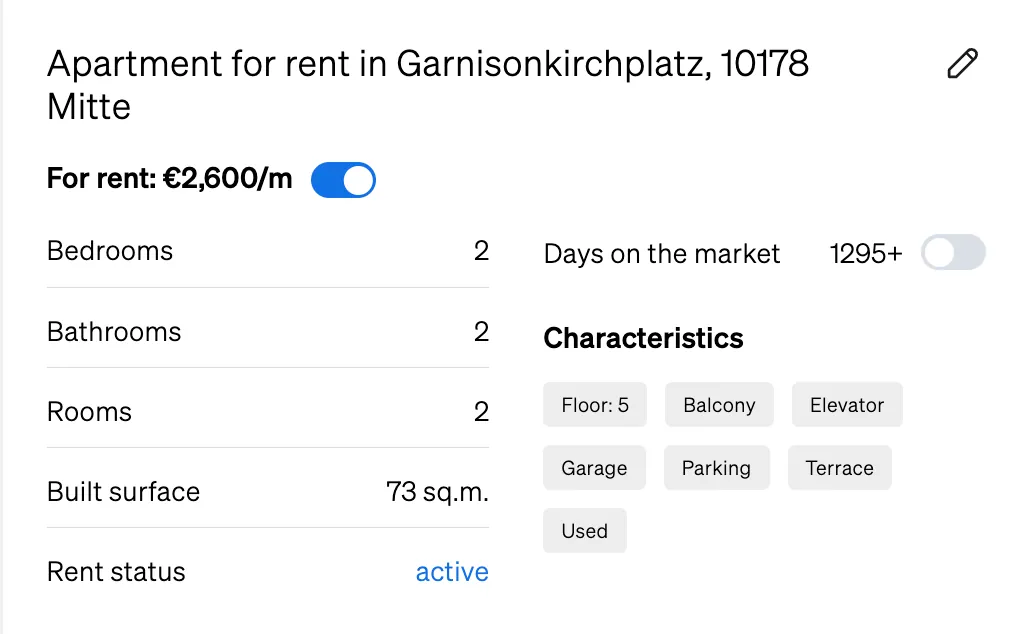
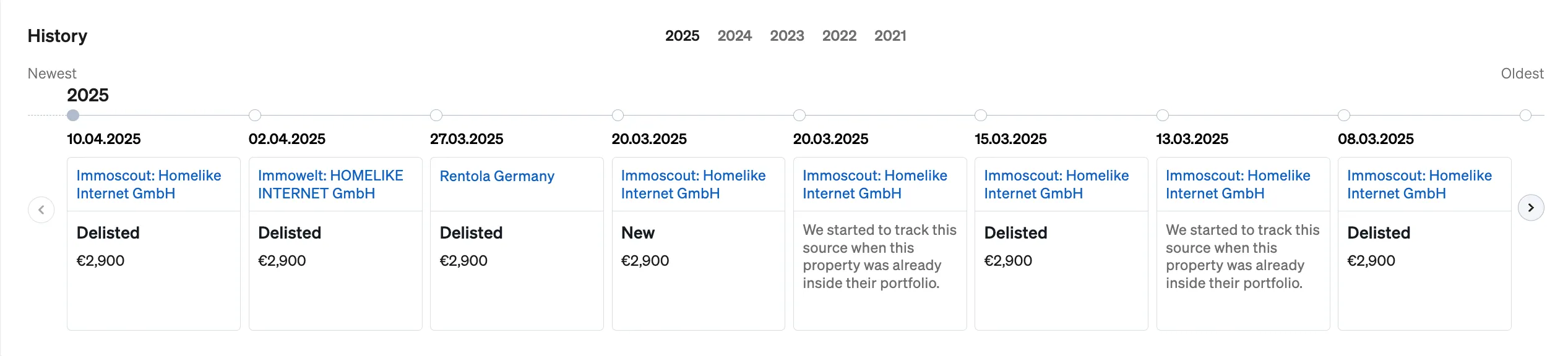
Inside each Property Page within CASAFARI’s Property Sourcing, you can find how long a property has been for sale. Also, another information available that works well when paired with Time on the Market is the history of the property, showing how many times it was removed from the market, put back again or went through increases and decreases in asking prices.
Property Page: all the information of an asset in a single place
These two pieces of information when put together will provide enough evidence for real estate professionals to improve their negotiation opportunities, increase their argumentation power with private sellers and understand the movements of the market like the palm of their hand.
Time on Market is much more than a simple statistic—it’s a window into the heartbeat of the real estate market. Real estate professionals who actively monitor and interpret this KPI can make smarter decisions, anticipate market shifts, and seize opportunities that others might overlook. Leveraging Time on Market data is a decisive advantage in a dynamic industry.
Frequently asked questions
What does Time on Market mean in real estate?
Time on Market is a key performance indicator showing how many days a property has been listed for sale before being sold or removed from the market. It provides essential insights into overall market liquidity and property desirability.
What does a high Time on Market indicate about a property?
A property lingering on the market usually points to an inflated asking price, low buyer demand or broader economic challenges. Unsold properties with extended days on market often signal increased seller motivation, creating opportunities for buyers and investors during price negotiations.
How can estate agents use Time on Market to win instructions from private sellers?
Homeowners selling privately often become more receptive to professional assistance as time passes without a sale. By tracking Time on Market for private listings, estate agents can identify the optimal moment to offer their services and convert stagnant private listings into successful sales.
How does CASAFARI track a property’s Time on Market and price history?
On each Property Page within CASAFARI’s Property Sourcing, real estate professionals can see the exact number of days a property has been listed. CASAFARI also displays a comprehensive property history, detailing delistings, relistings and asking-price changes over time. You can learn how to use the property history or consult the Property Sourcing API documentation for technical integrations.
How does comparing Time on Market across similar listings improve sales strategy?
Comparing Time on Market across similar properties in the same area helps agents evaluate their own listing strategies. If comparable properties sell faster, analysing those listings provides clear guidance on refining asking-price recommendations, marketing efforts and property staging.