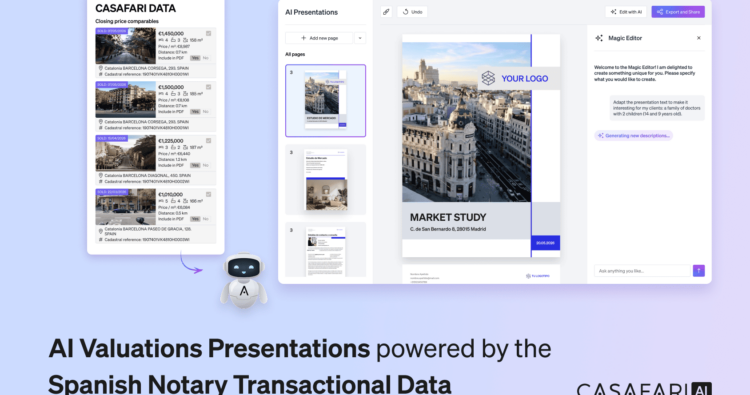
Technology should simplify your day, not complicate it. That’s why CASAFARI’s Agentic AI solutions handle all the complex technical work behind the scenes. Think of it as your ultimate backstage crew: the heavy lifting, data cleaning, and complex automations happen entirely under the hood. Real estate professionals simply tell CASAFARI AI Agents what they need, and we take care of the rest. This frees your team from administrative burnout and allows agents to focus on what truly drives growth—the human touch, relationship-building, and closing deals.
Key Highlights
Here’s a quick look at what we’ll cover in this guide about Agentic AI:
- The Human-First AI Revolution: Discover how Agentic AI simplifies complex workflows, shifting the grunt work to technology so agents can focus on client relationships.
- Zero Technical Effort for Agents: See how CASAFARI does all the heavy lifting under the hood, allowing you to manage and grow your portfolio simply by stating what you need.
- Automated Lead Filtering: Understand how liquidity management and automated qualification instantly surface the highest-value opportunities for your team.
- Frictionless First Contact: Explore how AI seamlessly orchestrates data gathering and message drafting, setting your agents up for a perfect, personalized human handoff.
Introduction
Scaling your business often means being everywhere at once, which can feel impossible. But, by automating your seller funnel, you can supercharge your lead generation and streamline your business processes. Imagine a system that scans countless sources for leads, gathers them all in one place, and prepares them for your first contact. This guide explores how embracing workflow automation with agentic AI can help you achieve scalable growth.
Understanding Agentic AI: Key Concepts and Evolution
Unlike earlier forms of AI that required constant human guidance, Agentic AI is designed to operate with a high degree of autonomy. They can understand goals, break down complex processes, and take action to achieve objectives without step-by-step instructions.
Let’s explore the core concepts that define this technology and how it stands apart from what came before.
What is Agentic AI?
Agentic AI refers to artificial intelligence systems that can operate autonomously, making decisions and taking actions without human intervention. This technology enables machines to learn from their environment and experiences, enhancing their functionality in various applications.
Key concepts of Agentic AI
Agentic AI not just about executing commands; they perceive their environment, reason through possibilities, and act on their decisions to achieve long-term goals. This makes them highly effective for dynamic process automation.
The core of agentic AI revolves around a few key ideas. These concepts are what enable the technology to move beyond simple task execution and into the realm of intelligent, autonomous operation. The most important concepts include:
- Autonomy: Agentic systems can perform tasks and make decisions without constant human oversight. They can manage multi-step problem-solving and track progress over time.
- Goal-Driven Behavior: Agents are given an objective and can independently devise a plan to reach it, using external tools and data as needed.
- Adaptability: These systems learn from experiences and feedback, allowing them to continuously improve their performance and adapt strategies to new situations.
Agentic AI vs Traditional AI: Key Differences
Traditional machine learning models operate within predefined constraints and often require human intervention to manage their tasks. They are excellent at pattern recognition and prediction based on their training data but lack the ability to act independently in a dynamic environment.
Agentic AI, on the other hand, doesn’t just process information; it uses that information to make decisions and proactively execute tasks to achieve a specific outcome. While a traditional AI might identify an opportunity, an agentic AI can act on it. This difference is crucial for real-world applications where conditions change and new information becomes available.
| Feature | Agentic AI | Traditional AI |
| Operation | Autonomous and goal-driven | Operates within predefined constraints |
| Interaction | Proactively interacts with external tools, APIs, and databases | Primarily provides responses based on training data |
| Adaptability | Learns from experience and adapts its behavior | Requires retraining to adapt to new data patterns |
| Human Role | Limited supervision; sets goals and provides feedback | Direct intervention and constant oversight |
Building an Automated Seller Funnel in Real Estate with Agentic AI

Building a high-performing real estate portfolio is about more than just speed; it’s about data-driven precision. With Agentic AI, you can transform your entire lead generation and qualification process, shifting your agents’ focus from manual prospecting to what they do best: negotiating and closing mandates.
The following sections outline how to define your brokerage workflows, identify high-value automation opportunities in the seller funnel, and leverage Agentic AI to build a scalable engine for sustainable growth.
Defining Workflow Automation in the Modern Real Estate Landscape
In the property sector, workflow automation is the orchestration of end-to-end business processes—automatically triggering actions like Valuations & Market Study generation or lead follow-ups based on real-time market changes. Instead of manually tracking property status updates or price drops across various portals, the software handles the handoffs, notifications, and data transfers.
Real estate teams simply can’t afford to waste hours on repetitive administrative work. Without automation, you risk losing “hot” leads to faster competitors, suffering from fragmented property data, and burning out your agents with manual data entry. The right automation framework frees your team to focus on high-value, client-facing activities—like property viewings and valuation pitches—that drive actual revenue.
The Seller Funnel: Stages and Opportunities for Automation
The seller funnel represents the journey a homeowner takes from initial market curiosity to signing an exclusive mandate. Each stage of this funnel presents unique opportunities to automate the “grunt work,” allowing your sales team to prioritize relationship-building.
By automating rule-based activities that don’t require a human touch, you ensure a frictionless path to conversion:
- Lead Generation: Automatically scan portals, private listings, and off-market data to identify potential sellers.
- Lead Aggregation: Consolidate fragmented listings and contact info from multiple portals into a single, centralized CRM.
- Qualification: Use predefined criteria (e.g., price-per-square-meter, time on market) to score leads and prioritize the most motivated sellers.
- Initial Outreach: Deploy personalized, data-backed introductory messages to warm up leads before the first agent call.
Agentic AI: Expanding the Top of the Funnel
Expanding your listing inventory is critical for growth, and this is where Agentic AI becomes your most valuable “virtual scout.” These agents monitor the digital landscape simultaneously, recognizing signals that indicate a potential seller—such as a property being delisted and then reappearing—long before a traditional lead reaches your desk.
Agentic AI enables you to:
- Monitor Cross-Border Data Streams: Track listings and news outlets for market shifts in real time.
- Identify Distressed or Urgent Sales: Pick up on language or events (like sudden price drops or “urgent” keywords) that suggest a high probability of a sale.
- Operate 24/7: Ensure you are the first to contact a private seller, regardless of when the listing goes live.
Aggregating Fragmented Market Intelligence
The biggest hurdle in real estate is that market intelligence is scattered across hundreds of disconnected portals and private sites. Agentic AI solves this by “hunting” for scattered leads, extracting relevant property specs, and channeling them into a consistent data flow directly to your database. This eliminates the “tab-switching fatigue” and ensures your market view is complete.
Centralizing Leads for Streamlined Portfolio Growth

When leads are scattered across spreadsheets, emails, and WhatsApp messages, it’s impossible to manage a pipeline or track the velocity of your portfolio.
A centralized lead database creates a “single source of truth.” Your agents can instantly see which properties have been appraised, who is a priority for follow-up, and which mandates are nearing expiration. As you scale your inventory, this centralization ensures you can handle an influx of listings without the chaos of data duplication or missed opportunities.
How Agentic AI Transforms Workflow Automation
Agentic AI elevates real estate automation from a simple task-doer to a strategic partner. Instead of just following a rigid script (e.g., “if this, then that”), an AI agent can analyze a market shift, decide if a lead meets your specific portfolio criteria, and execute a response.
You are no longer limited to linear processes. With Agentic AI, you can automate dynamic workflows that adapt to the volatility of the real estate market in real time, giving you a distinct competitive advantage.
Scanning Market Intelligence: Data-Driven Lead Generation
In a competitive market, the best instructions are won by being first to the door. Effective lead generation is fueled by high-quality real estate data intelligence, and Agentic AI makes this possible by continuously scanning the digital landscape for signals that indicate selling intent. It transforms raw property listings and fragmented market noise into a pipeline of qualified leads.
When building your seller funnel strategy, you must look beyond the obvious portals. To gain a truly comprehensive view of the market, your strategy should encompass diverse data sources—from FSBO (For Sale By Owner) listings to price change alerts and planning applications. Agentic AI doesn’t just watch these streams; it processes the technical nuances of each property to provide a clear path to the next mandate.
How Agentic AI Tools Analyze Multiple Data Streams
Agentic AI tools connect to the heartbeat of the real estate market through APIs, advanced web scraping, and direct database queries. This allows them to monitor Multiple Listing Services (MLS), local property portals, and even social media groups in real time, capturing new inventory the moment it hits the web.
Once the data is ingested, the agents perform the critical “heavy lifting” of de-duplication and normalization. They use Natural Language Processing to understand the context of a listing—identifying keywords that suggest urgency (like “relocation” or “quick sale”), assessing sentiment, and recognizing the intent behind a “Price Reduced” tag. By finding these opportunities before they are aggregated by major portals, you stay one step ahead of your competitors.
Agentic AI Frameworks for Market Intelligence Processing
To manage the complexities of global real estate data at scale, Agentic AI relies on structured frameworks. These frameworks orchestrate how different AI agents collaborate to collect, analyze, and verify property information, creating a standardized system for portfolio-wide automation.
One common framework involves a “Conductor” agent that oversees the entire valuation and sourcing workflow. It might assign a “Search Agent” to find new private listings and a “Valuation Agent” to run a Property Valuation based on historical data. Other architectures might use a decentralized approach where specialized agents verify legal status and property characteristics simultaneously. Regardless of the structure, these frameworks allow your brokerage to handle a massive volume of market information, delivering actionable insights and pricing accuracy with unmatched speed.
Liquidity Management & Lead Qualification
Generating a high volume of leads is only half the battle. To be effective, you need a system to filter out the noise and identify the instructions most likely to result in a successful sale. This is where liquidity management and automated lead qualification become essential for a modern brokerage.
By aligning your lead flow with your team’s operational capacity and strategic goals, you ensure that your agents aren’t just “busy,” but are actively working on properties that will move. Combined with automated qualification, this approach refines a chaotic market feed into a high-quality, high-velocity pipeline.
What is Liquidity Management in Portfolio Building?
In the real estate sector, liquidity management refers to maintaining a steady, balanced stream of viable listings that match your brokerage’s capacity and focus. It is about ensuring your “stock” (the mandates you hold) is constantly turning over to maintain cash flow and market presence.
Without proper liquidity management, your team might be buried under a flood of low-margin, difficult-to-sell properties that consume time and marketing budget without delivering results. Conversely, you could face “dry spells” where your pipeline runs empty. Striking this balance is crucial for any firm aiming for scalable portfolio growth and a dominant market share.
Agentic AI Solutions for Filtering and Prioritizing Leads
Agentic AI solutions offer powerful automation for filtering and prioritizing mandates with incredible precision. After aggregating data from private sellers and multiple portals, these systems apply complex conditional logic to score each lead based on your specific investment or agency criteria.
This scoring can be based on dozens of variables, such as:
- Pricing Accuracy: Comparing the asking price against the current market average.
- Seller Motivation: Identifying “urgency” signals in listing descriptions or frequent price drops.
- Property Characteristics: Filtering for specific asset classes, square footage, or high-demand neighborhoods.
- Market Velocity: Assessing how quickly similar properties are selling in that specific micro-location.
The AI cross-references information from disparate data sources to build a comprehensive 360-degree profile of each lead, ensuring your team only invests their time in prospects with the highest probability of conversion and closing.
Why Leaving Lead Qualification to Agentic AI is a Competitive Advantage
Manually sifting through thousands of potential listings is one of the most inefficient tasks an agent can perform. It is a tedious process, prone to human error—like missing a price drop on a key property—and it pulls your top talent away from revenue-generating activities like viewings, valuations, and negotiations.
Agentic AI transforms this workflow by:
- Working 24/7: Qualifying leads the second they hit the market, even outside of business hours.
- Perfect Consistency: Applying your exact brokerage criteria to every lead without bias or fatigue.
- Data Enrichment: Automatically pulling historical data and ownership records to verify lead quality.
The result is a dramatic increase in agent productivity and significant cost savings. Your team is freed from the drudgery of “lead-hunting” and is instead handed a pre-qualified pipeline of high-potential prospects. This not only boosts morale but also accelerates your sales cycle, ensuring your portfolio grows faster and more efficiently than the competition.
AI Agentic Workflows: Orchestrating First Contact

Once your leads have been identified and qualified through the CASAFARI intelligence data layer, the next step is orchestrating the “first touch.” In real estate, the speed and quality of this initial contact often determine who wins the listing. Agentic AI workflows can “warm up” the lead before your agents even pick up the phone, ensuring they walk into every appraisal or pitch with a full tactical briefing.
This level of orchestration transforms a cold list of property owners into a series of high-value conversations, enhancing your professional reputation from the very first interaction.
Preparing Leads for Outreach With Automated Workflows
Before an agent reaches out to a homeowner, a series of automated workflows can consolidate a comprehensive Property Dossier. Using a no-code workflow builder, you can design a process that enriches every lead profile with mission-critical data: property price history, previous time-on-market, and local neighborhood trends.
This automation ensures a seamless handoff to your team. Instead of an agent spending hours manually researching a property on various portals, the AI automatically:
- Pulls property pricing data.
- Checks for any prior interactions in your CRM to avoid “double-contant.”
- Aggregates public records regarding the property’s legal status or tax history.
This preparation stage is vital for team collaboration. When your listing agent receives a notification, they don’t just see a phone number—they see a strategic overview, allowing them to focus entirely on the human element of the pitch.
Agentic AI: Use Cases for Personalizing Messaging
Generic “Do you want to sell?” emails are a relic of the past. In a sophisticated market, personalization is your greatest leverage. Agentic AI analyzes the specific data points of a lead to generate outreach templates that address a seller’s unique situation—such as a motivated seller who has just dropped their price or a landlord whose rental listing has expired.
Agentic AI can personalize your outreach by mentioning the client’s name, mentioning the kind of properties they’re interested in, highlighting relevant information for them or remembering previous interactions, for example.
This level of detail shows the homeowner that you are a market expert who has already done the homework, significantly increasing the likelihood of securing an exclusive mandate.
Best Practices for Automation in Initial Contact
The goal of automation in real estate is to assist, not replace, the agent. A well-designed system should empower your team to be more empathetic and present, not remove them from the conversation entirely.
- AI for Drafting, Humans for Closing: Let the AI generate the data-heavy first draft, but ensure the agent reviews it to add their personal touch and local expertise.
- Don’t Over-Automate: Automate the research and scheduling, but keep the actual dialogue human. A property is a person’s most valuable asset; they need to feel a human connection.
- Seamless Handoff: Ensure that when a seller replies, the transition from an automated follow-up to a live agent is invisible and instantaneous.
Choosing the Right Workflow Automation Software
Selecting the right Agentic AI tool is a critical architectural decision that will determine your brokerage’s ability to capture market share. In the high-stakes world of real estate, you need a solution that is not only powerful enough to process millions of property data points but also intuitive enough for your listing agents and transaction coordinators to use daily.
A premier platform should empower your team to automate the seller journey without requiring a degree in data science. It must sit at the center of your ecosystem, pulling from your data layer and pushing to your CRM as your portfolio scales. The following sections outline the essential features for selecting a platform built for the future of real estate.
Key Features to Look For in Real Estate Automation Tools
When evaluating Agentic AI, look beyond simple “if-this-then-that” bots. You need a platform capable of autonomous reasoning—one that can look at a new “For Sale By Owner” (FSBO) listing, compare it to historical neighborhood trends, and decide if it warrants an immediate alert to your lead acquisition team.
The right tool should feel like an automated extension of your principal broker’s strategy. When comparing options, prioritize these professional-grade features:
- No-Code/Low-Code Workflow Builder: A visual interface that allows your Operations Manager to map out the journey from “Lead Identified” to “CMA Generated” without writing a single line of code.
- Natural Language Interface: The ability to query your portfolio or command your agents using everyday real estate terminology (e.g., “Summarize the last three months of price drops in the luxury segment”).
Integration Capabilities with the Real Estate Tech Stack
An Agentic AI tool is only as effective as its connectivity. Your brokerage likely relies on a fragmented stack: CRMs, communication tools like WhatsApp, and specialized property databases. Seamless integration is mandatory to eliminate the data silos that cause deals to fall through the cracks.
Look for a tool with robust, pre-built connectors for the tools you already use. For proprietary or local listing databases, strong API support is non-negotiable. This ensures AI agents have real-time access to the CASAFARI data intelligence layer, allowing them to push qualified mandates directly into your sales pipeline without manual data entry.
Scalability and Adaptability for Growing Portfolios

As you expand into new territories or asset classes, your automation needs will grow exponentially. A system that works for a boutique local agency will buckle under the data volume of a multi-country enterprise.
True scalability means:
- High-Velocity Processing: The architecture must handle thousands of concurrent data streams (price changes, new listings, news alerts) without latency.
- Strategic Adaptability: As you pivot your strategy—perhaps moving from residential sales to commercial acquisitions—the platform must allow you to reconfigure your “Scout Agents” and “Valuation Agents” on the fly.
- Performance Stability: Ensuring that as your lead volume triples, your automated outreach remains as precise as it was on day one.
Security and Privacy in Property Transactions
In real estate, you are handling sensitive homeowner data and proprietary market intelligence. Security is not a “nice-to-have”—it is a legal and reputational requirement. A data breach involving client contact info or unlisted contract details could result in severe financial penalties and a loss of market trust.
A professional Agentic AI tool must have security baked into its DNA, ensuring that your competitive advantage remains private. Before onboarding, verify:
- Compliance Certifications: Ensure the platform adheres to global standards like GDPR or SOC 2, which are critical when handling European property data.
- Granular Access Control: The ability to restrict data so that a junior agent only sees their assigned leads, while the Managing Director maintains a bird’s-eye view of the entire portfolio.
- Comprehensive Audit Logs: A transparent record of every action taken by an AI agent—crucial for accountability and ensuring your automated outreach aligns with your brand’s ethical standards.

CASAFARI’s Agentic AI Solutions for Scaling and Growing Your Portfolio
As the architect of the world’s only AI real estate data intelligence layer, CASAFARI bridges the gap between raw information and actionable growth. We recognize that AI is only as powerful as the data fueling it. While others focus on the interface, we focus on the integrity—providing complete, hyper-clean data across 20+ countries to automate the entire seller journey. Our vision is to transform traditional portfolios into high-velocity sales engines by ensuring every AI-driven decision is rooted in market transparency and unrivaled data quality.
Leveraging this foundation, our suite of Agentic AI solutions acts as a sophisticated extension of your team, specifically designed to scale your operations through intelligent automation. Our platform doesn’t just assist; it executes—identifying unique selling opportunities, from private listings to motivated sellers, that remain invisible to the rest of the market. By empowering our Agentic AI to pinpoint leads, set precision pricing, and convert prospects into mandates, we handle the heavy lifting so you can focus on what matters most: closing deals and fostering client relationships.
Conclusion
Embracing Agentic AI doesn’t mean replacing the human element of real estate; it means elevating it. By seamlessly aggregating fragmented market intelligence and centralizing leads, this technology creates a frictionless pathway to engage potential sellers.
With CASAFARI, you don’t need to be a data scientist to reap the rewards of automation. Our platform takes care of all the technical heavy lifting behind the scenes. Real estate professionals simply tell us what they need, and our system takes care of the rest—running the data streams, qualifying the leads, and prepping the outreach. By leaving the digital “grunt work” under the hood, your agents are empowered to do what they do best: apply the human touch, build trust, and close mandates.

Frequently Asked Questions
How does liquidity management support automated lead generation?
Liquidity management uses automation to filter and prioritize leads, allowing the team to focus resources on opportunities that best align with your portfolio growth strategy.
How have agentic AI platforms evolved with the introduction of AI in 2026?
Workflow automation tools now use machine learning and AI for decision-making, adapt to new information, and handle complex, dynamic tasks that were previously impossible to automate.
Want an example? CASAFARI can help estate agents to automate the seller journey by leveraging agentic AI to find leads, set the correct price and convert them into mandates (even customizing messages to clients!).
What market intelligence sources should be included in my seller funnel strategy?
Your seller funnel strategy should include diverse market intelligence data sources like public records, social media, online forums, and news outlets, in addition to real estate portals. CASAFARI draws data from over 30,000 sources, cleaning and deduplicating it, to make sure you have a comprehensive vision when analysing the market.
What features should I look for in an agentic AI workflow automation platform?
When choosing agentic AI tools, look for key features like a no-code workflow builder, agents that can act independently, and strong integration capabilities, such as CASAFARI’s agentic AI.