
Will 2016 be a good year for Spanish property?
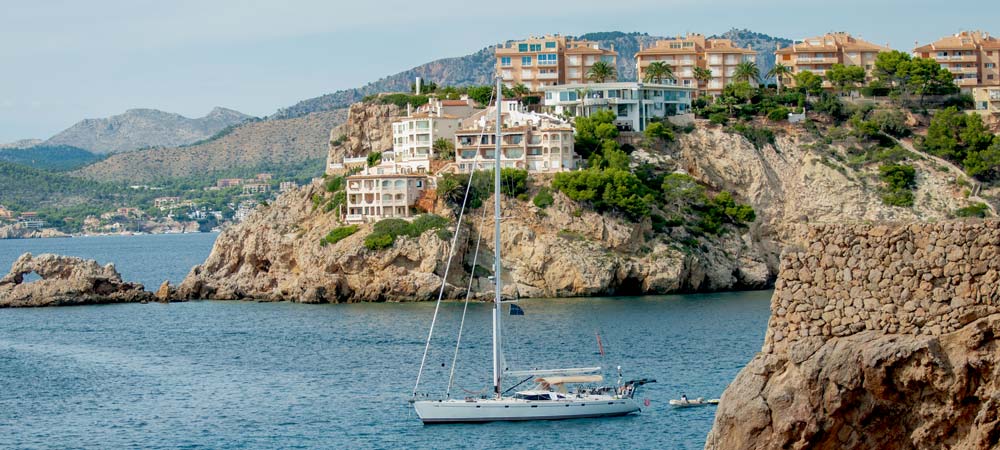
While analysts predict significant growth for the Spanish property market in 2016, recovery is divided into two distinct sectors: high-end coastal properties and holiday rentals where overseas demand outstrips supply, versus primary residences with asking prices below €200,000 where 24.9% of the 1.5 million homes built since 2008 remain vacant according to valuation firm Tinsa.
So what is fuelling these expectations, and do these positive dynamics apply across all price categories and locations?
To answer these questions, we refer to three particular developments taking place between 2013 and 2015.
- The Spanish property market has developed into two distinct categories.
- Although there has been an upward movement in sales, there is still room for growth.
- The price increases do not apply to all properties or geographical areas.
So let us examine each of these points more closely.
1. It’s important to bear in mind that in Spain there are clearly two separate, parallel property markets, which in most instances do not have any immediate impact on each other. If one moves ahead, the other may not necessarily follow.
Why is Spain’s primary residence sector slower to recover?
Typical buyers in this sector are Spanish nationals seeking homes with asking prices below €200,000 situated close to their places of work. These buyers are usually dependent on bank mortgages, which require job security. This sector has been heavily hit by the Spanish financial crisis caused by the speculative housing bubble that occurred in the decade to 2008.
Seseña, Province of Toledo, a ghost town 35km from Madrid.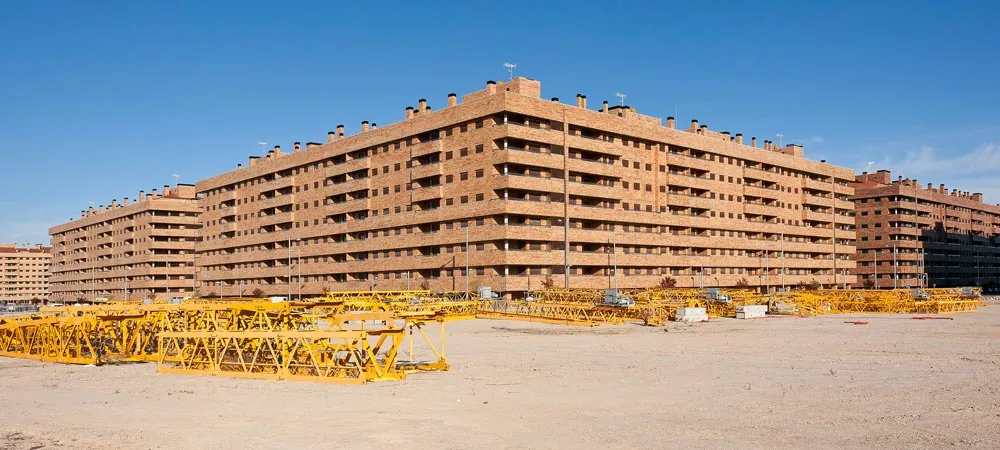 Seseña / Gabri Solera (CC BY-NC-ND 2.0)
This market trend is closely linked to mortgage lending, as the greater the availability of mortgages, the greater the number of sales completed. Despite a drop in Spanish unemployment and some improvement in the economy, there are still several factors preventing a full recovery in the country’s primary residence sector.
- Around 700,000 Spanish homes were constructed annually in the decade to 2007, more than those in the UK, Germany and France combined.
- According to Tinsa, of the 1.5 million dwellings built since 2008, 24.9% remain vacant and it’s estimated that it will be more than three years before these are absorbed into the housing market.
- There is, however, an uneven distribution, as 80% of these buildings are concentrated in just 10% of the country’s urban areas, and it could take many years before they are either purchased or rented.
- State-driven propaganda has encouraged home ownership as opposed to renting. Consequently, more than 80% of Spaniards currently live in their own homes. This equates to 10% more than in the UK and 30% more than in Germany, despite the fact that the economies of these countries are stronger, and that their unemployment rates were about 17% lower than Spain’s during 2015.
Owner occupation as opposed to property rental in European countries. 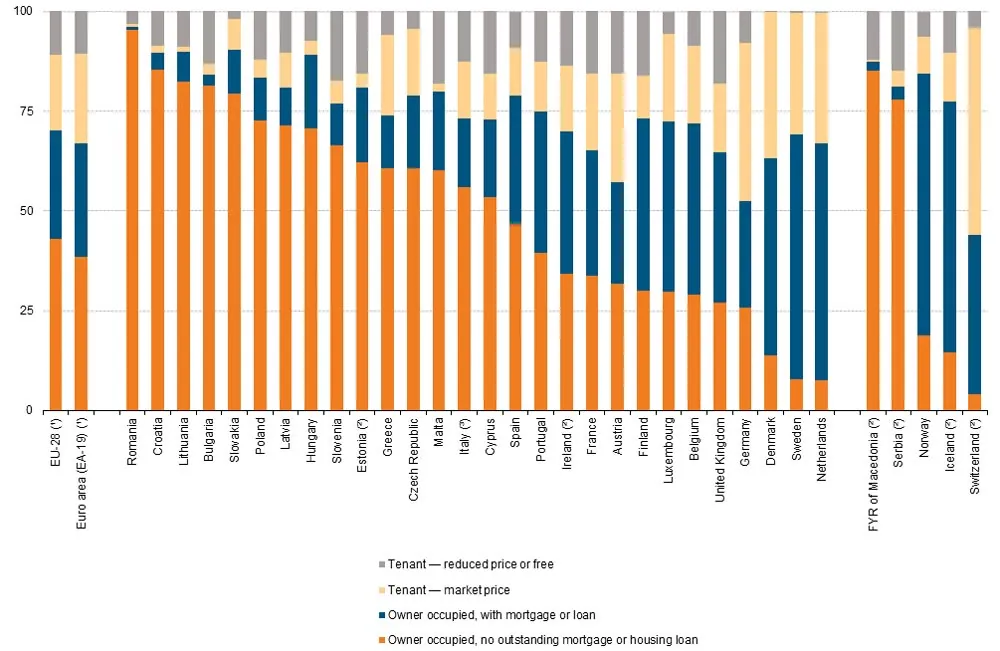 Source: Eurostat (Housing Statistics, 2014)
- Spain enjoys the 6th lowest overcrowding rate amongst European countries, based on the number of people per room and per square metre. Only 5% of the total population lives in overcrowded accommodation, which is around half the European average. Spanish residents currently have more living space than most other Europeans including the Germans, French, Austrians and British.
**Overcrowding rates (based on the number of people per room and dimensions in metres) in European countries. The greater the rate, the more people living in one housing unit.
**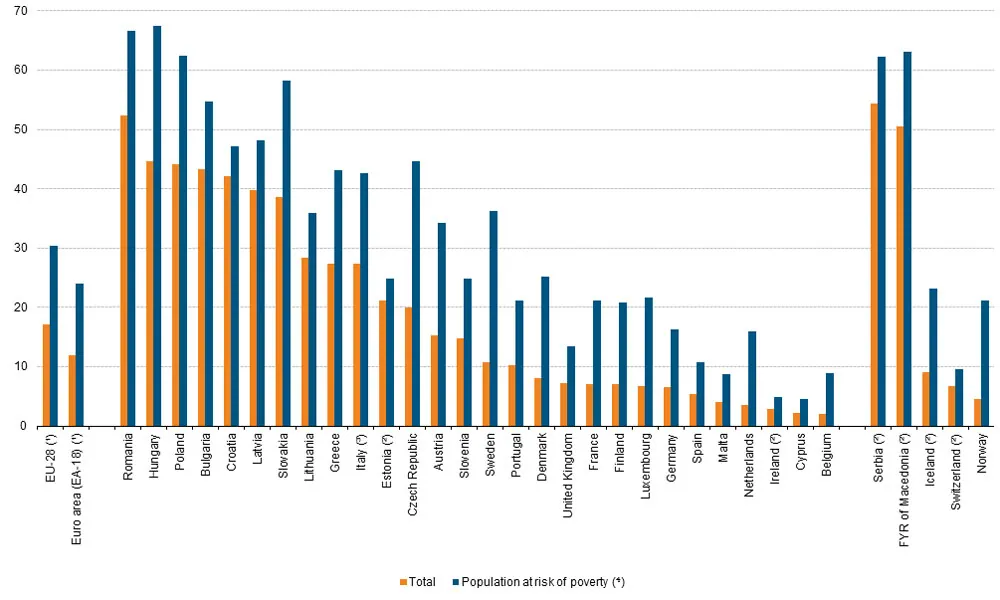 Source: Eurostat (Housing Statistics)
- Despite the slowdown in the issuing of new mortgages and various programmes put in place to ease the private debt situation, Spanish private mortgage loans still amount to €0.5 trillion.
- Between 2007 and 2011, an estimated 500,000 people lost their homes and mortgage repayments amounted to 40% of the original purchase price. Properties purchased between 2002 and 2008, often have mortgages of between 120 and 140% of the home’s current market value.
**Gross Rent Multiplier (Purchase Price versus Annual Rental Yield) or how many years it could take to realise a return on the investment – the higher the figure, the less sense it makes to buy instead of renting long term.
**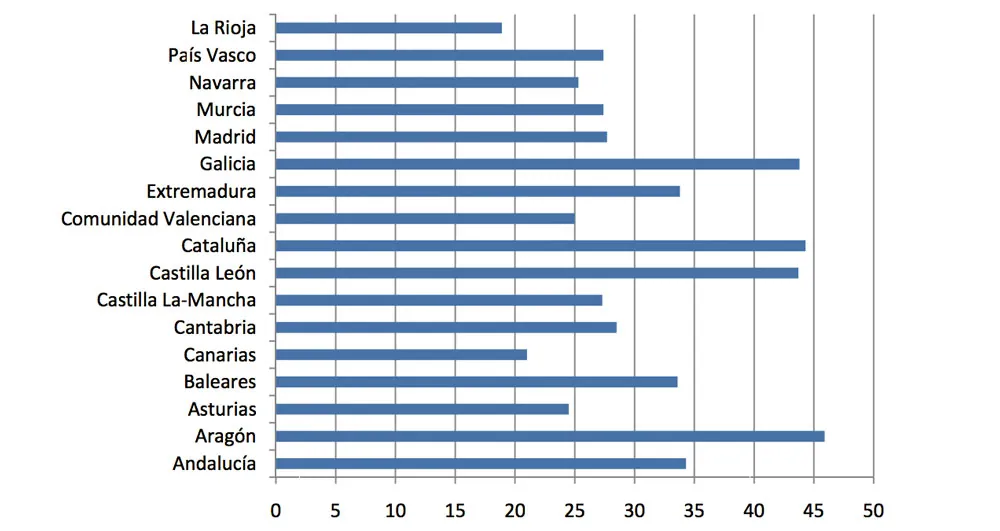 Source: Instituto Juan de Mariana (independent libertarian economics research institute)
In the primary residence sector, owners typically have a single property and in many cases, it still makes sense to rent rather than buy. In areas such as Catalunya, Galicia, Castilla, Leon and Aragon, it would take over 40 years before the purchase price reaches a break-even point against long-term rental.
What is driving overseas demand for luxury coastal property in Spain?
The main demand in this sector is from abroad. Typical buyers are affluent foreigners known as High Net Worth individuals (HNWIs) from the UK, France, Germany, Scandinavia, Russia and China. These buyers are typically looking for luxury villas and apartments, particularly in areas where there is limited availability such as Marbella, Mallorca, Ibiza, the Canary Islands and some parts of Barcelona Province.
Cielo de Bonaire, Alcudia, Mallorca (Balearic Islands), surrounded by the Victoria Nature Reserve with views over the bays of Pollensa and Alcudia, near the mountains of Serra Tramuntana (UNESCO World Heritage Site) and the Levant Nature Reserve, has some of the most desirable properties in Spain.
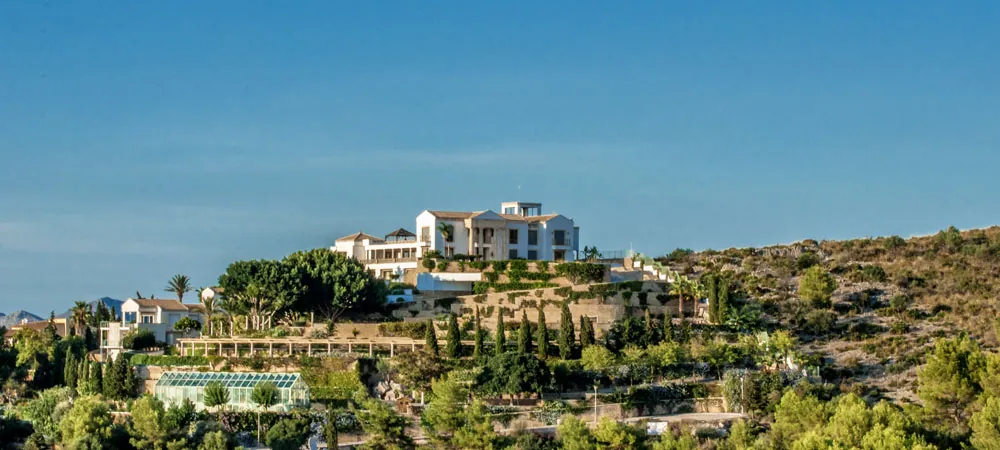 Source: casafari.com. All rights reserved.
These buyers are usually in the market for second homes while a number also invest in commercial properties and short-term vacation rentals in the most popular holiday destinations. The stable economies of these individuals’ home countries, combined with their stronger currencies means buying a second home in the eurozone is often a bargain.
Russian and Chinese investors are increasingly buying property in the region to counteract possible financial crises and economic slowdown in their home nations. With limited investment options back home and volatility in global stock markets, Spanish property, supported by low-interest rates and positive upward trends, can appear an attractive proposition.
According to reports from Realtor.com, via Knight Frank and Sothebys, global investor interest in luxury estates in the Iberian Peninsula has increased exponentially over the past three years. During this period, Spain has seen the first serious signs of recovery in most parts of its economy, and in 2015 Spain was the fastest growing major economy in Western Europe.
“Luxury residences in holiday markets are thriving throughout the world,” according to Sotheby’s.
Historical and forecasted GDP Annual Growth in Spain 1996 – 2016 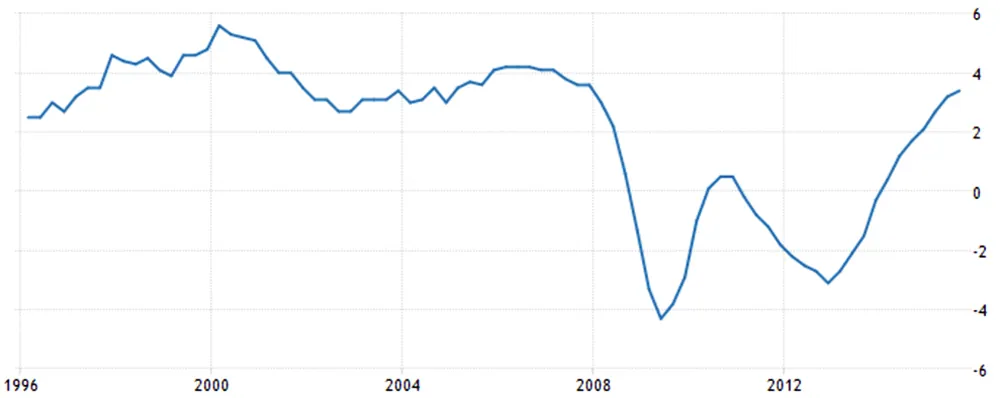 Source: INE / Tradingeconomics
This has triggered a revival in the property market. However, government statistics can be misleading as diverse types of real estate are mixed together; evaluating market segments with CASAFARI Area Insights helps clarify true local dynamics and trends.
In reality, there remains a large housing stock of primary residences, for which there is a low demand, as opposed to second homes where demand is beginning to outstrip supply.
The graph shows a strong correlation between demand from overseas and the health of the overall Spanish property market. Provinces such as Alicante are the exception, with these regions still reporting a high density of unoccupied stock.
**Correlation between purchases by overseas buyers + annual increase in sales transactions by province.
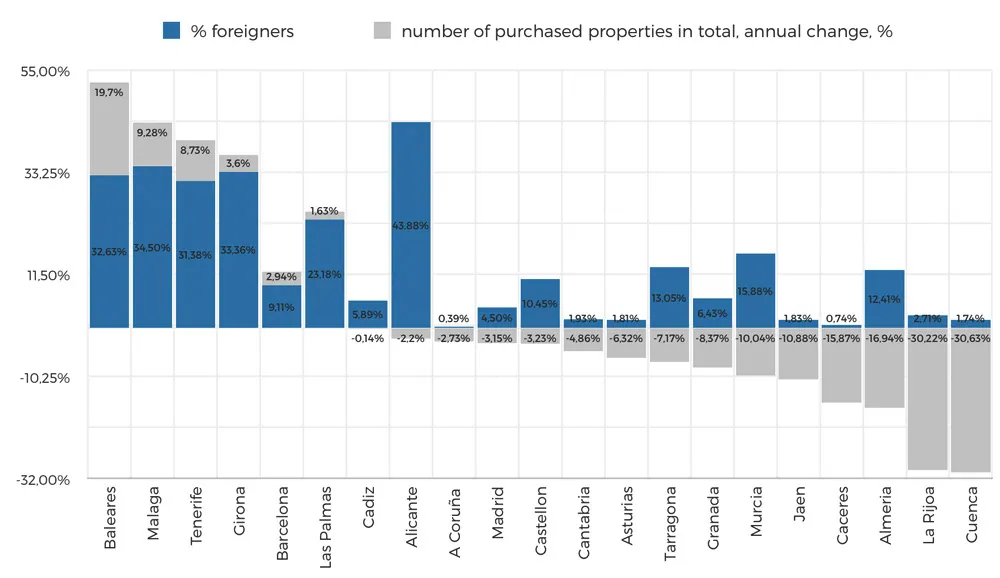 **Source: Registradores
Reports from estate agents in the Balearic Islands of Mallorca and Ibiza, which are very popular with overseas buyers, suggest that demand for some types of property has already outgrown the supply. These areas typically attract middle-class buyers seeking apartments with asking prices in the €300,000–€500,000 bracket in secluded, exclusive coastal areas. Wealthy purchasers demand villas with a sea view and proximity to amenities such as golf courses, marinas, high-end restaurants and airports.
Although these are often cash buyers, banks in their own countries are willing to offer them cheap credit to purchase foreign properties. This confidence has helped to fire the second home market in prime locations.
The investment in holiday apartments and rental villas is increasing and in 2014, holiday rentals in private homes became a €2.6 billion business in Spain. More than 14% of all tourists stayed in apartments and houses during 2014-2015. This figure is eventually expected to reach almost 20%.
With the holiday season spanning more than six months and occupancy rates remaining high—with nightly rates exceeding €1,500 in popular resort areas—investors interested in owning a rental property in Mallorca and Ibiza or Barcelona Province can realise mean annual rental returns of over 10%.
Monthly Overnight Stays in Holiday Housing Y-o-Y Growth from October 2014 – October 2015 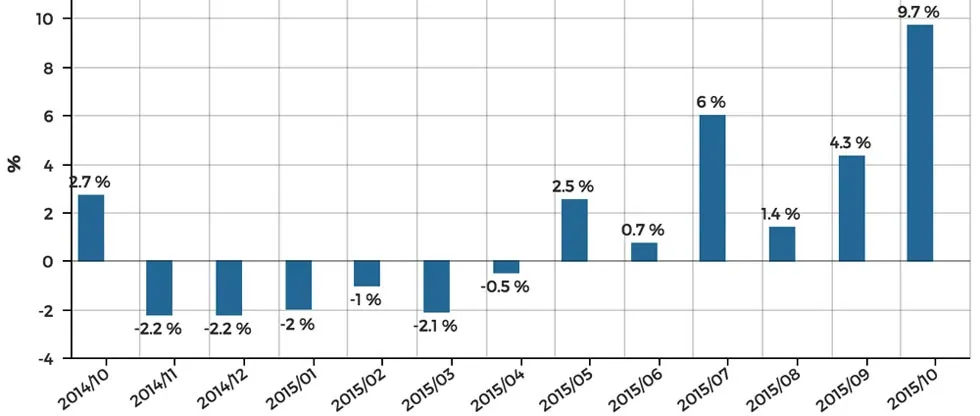 Source: INE / casafari.com
For professionals considering investing in Spanish property, tracking the development of asking prices and sale transactions across both sectors is essential, particularly for prime real estate aimed at overseas buyers.
Frequently asked questions
What are the two distinct sectors of the Spanish property market?
The Spanish property market splits into primary residences and luxury coastal real estate. Primary residences are typically sought by domestic buyers seeking homes with asking prices under €200,000 near their places of work. Luxury coastal properties attract overseas High Net Worth Individuals and foreign buyers seeking second homes or holiday rentals in prime locations.
Why is there still an oversupply of primary residences in Spain?
Around 700,000 homes were constructed annually in Spain in the decade to 2007. According to valuation firm Tinsa, 24.9% of the 1.5 million dwellings built since 2008 remain vacant. Furthermore, 80% of that vacant housing stock is concentrated in just 10% of the country’s urban areas.
Which Spanish regions see the strongest demand from overseas property buyers?
Overseas property buyers focus primarily on coastal and island regions where available inventory is limited. Demand is strongest in Marbella, Mallorca, Ibiza, the Canary Islands, and prime areas within Barcelona Province. Buyers in these locations seek second homes, commercial properties, and short-term holiday rentals.
What rental yields do holiday properties in Mallorca, Ibiza and Barcelona achieve?
Private holiday rentals generated €2.6 billion in Spain in 2014, according to the Instituto Nacional de Estadística (INE). In popular resort areas of Barcelona Province, Mallorca, and Ibiza, high occupancy rates, holiday seasons exceeding six months, and nightly asking rates above €1,500 produce gross annual rental returns of over 10%.
How can investors and agents track asking and closing prices across Spain?
Real estate professionals use CASAFARI Area Insights to evaluate hyper-local asking price trends across property portals. Technical documentation for custom integrations is available via the CASAFARI Area Insights API documentation. Registered users can also access comprehensive portal history and official Spanish Notariado closing data on the CASAFARI platform.