
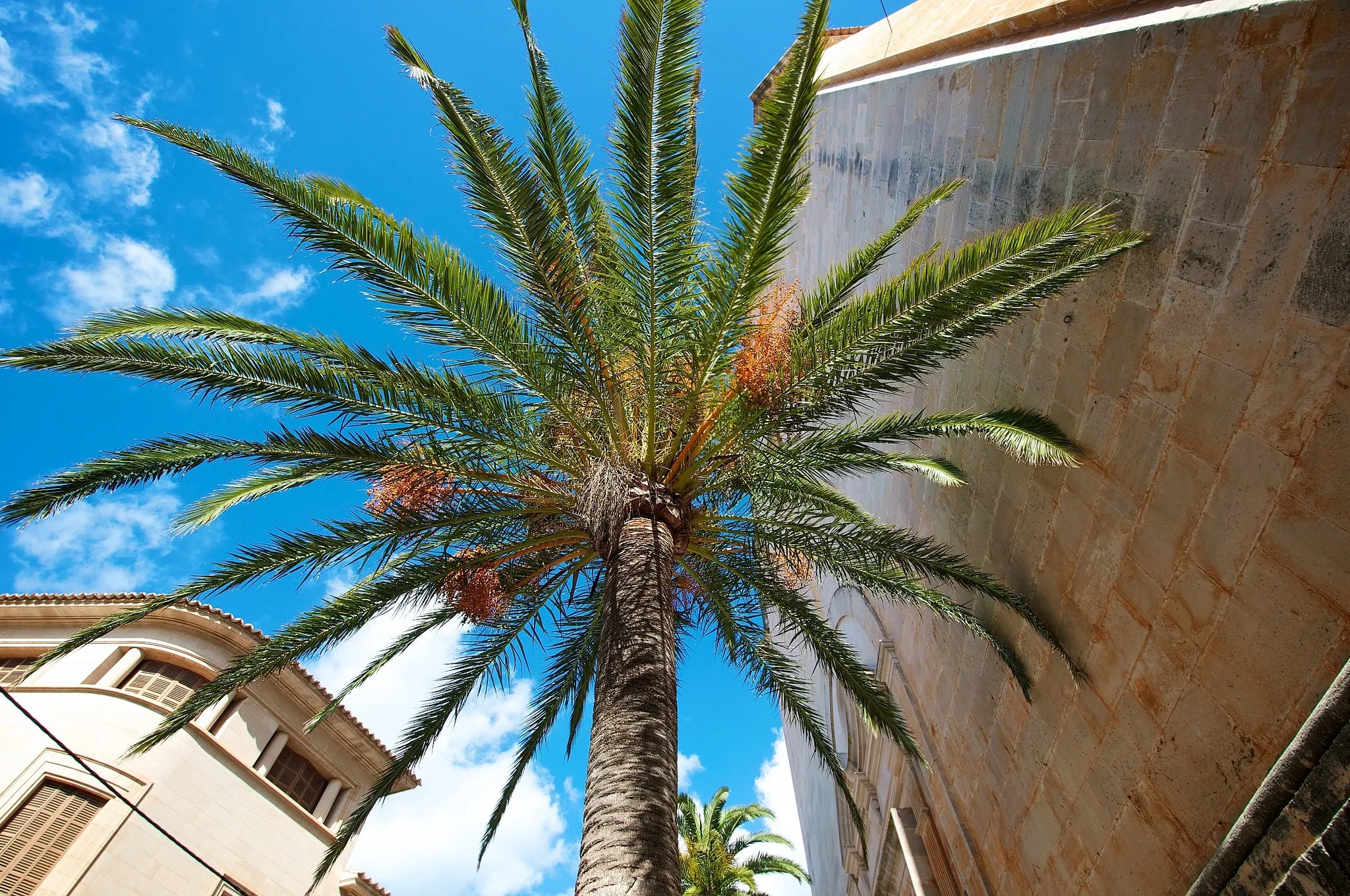
SANTANYI TOWN PROPERTY GUIDE
Golden-stone rural town boasting a myriad of attractions
Santanyí town offers international buyers an authentic, year-round Mediterranean lifestyle in south-eastern Mallorca. The historic town nucleus accommodates 3,746 residents within a wider municipality of 13,067 (INE, 2025). Located 49 to 52 km from Palma via the Ma-19 motorway, Santanyí is renowned for its golden sandstone townhouses, strict rural plot planning rules (minimum 14,000 m²), and tight holiday rental licence restrictions.
Why are international buyers choosing property in Santanyí town?
Santanyí stands apart from many Balearic coastal destinations by maintaining a vibrant, year-round community. According to official municipal census data published by INE / SoloPueblos, the wider municipality of Santanyí recorded 13,067 inhabitants as of 2025, while the main historic town nucleus accounted for 3,746 settled residents. This creates a balanced urban atmosphere where local shops, bakeries, and services remain open throughout the winter months.
Buyers and estate agents operating in south-east Mallorca generally target three main property archetypes within the Santanyí market:
- Sandstone townhouses: Historic multi-storey homes located in the pedestrianised town centre, featuring interior courtyards (patios), exposed wooden beams, and traditional stone arches.
- Country fincas: Detached rural estates situated on surrounding agricultural land, offering privacy, expansive gardens, and modern sustainable technology.
- Coastal villas and apartments: Contemporary residential properties located in nearby coastal enclaves such as Cala Figuera, Cala Santanyí, and Cala Llombards.
Accessibility remains a significant advantage for home buyers. The drive from Palma de Mallorca and Palma Airport (PMI) to Santanyí town spans 49 to 52 km along the Ma-19 motorway via Llucmajor and Campos, taking between 38 and 45 minutes by car. For those utilising public transport, the TIB Mallorca public bus network operates Line 501 connecting Palma to Campos, where passengers connect to Line 515, as well as a direct seasonal express Line 515e, taking 75 to 90 minutes. Prospective purchasers reviewing the wider acquisition process can consult our complete guide to buying property in Spain.
How do golden sandstone architecture and local culture shape the town?
Santanyí’s architectural identity is defined by pedra de Santanyí, a warm, honey-coloured local limestone quarried in the municipality. Historically, this durable sandstone was exported across the island to construct iconic civic monuments, including Palma’s Cathedral (La Seu) and the 14th-century maritime exchange (La Llotja).
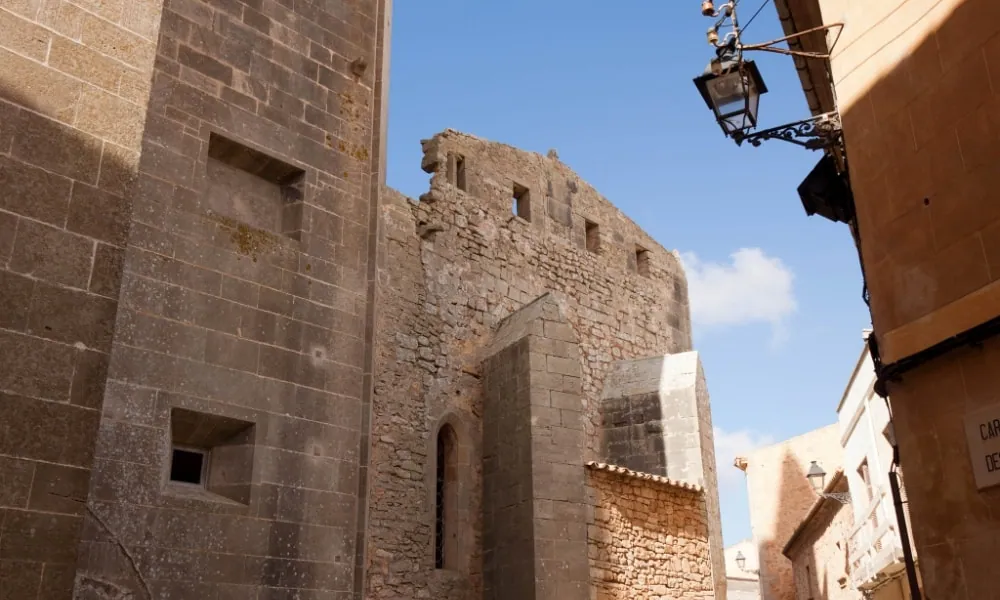
The town was officially established under the Ordenacions royal charter issued by King Jaume II in 1300. Following centuries of coastal raids by Ottoman pirates, a defensive stone perimeter was erected during the 16th century. The historic town gate, known as Porta Murada, remains standing today near Plaça Major as a reminder of Santanyí’s medieval fortifications, as documented in the Ajuntament de Santanyí historical archive.
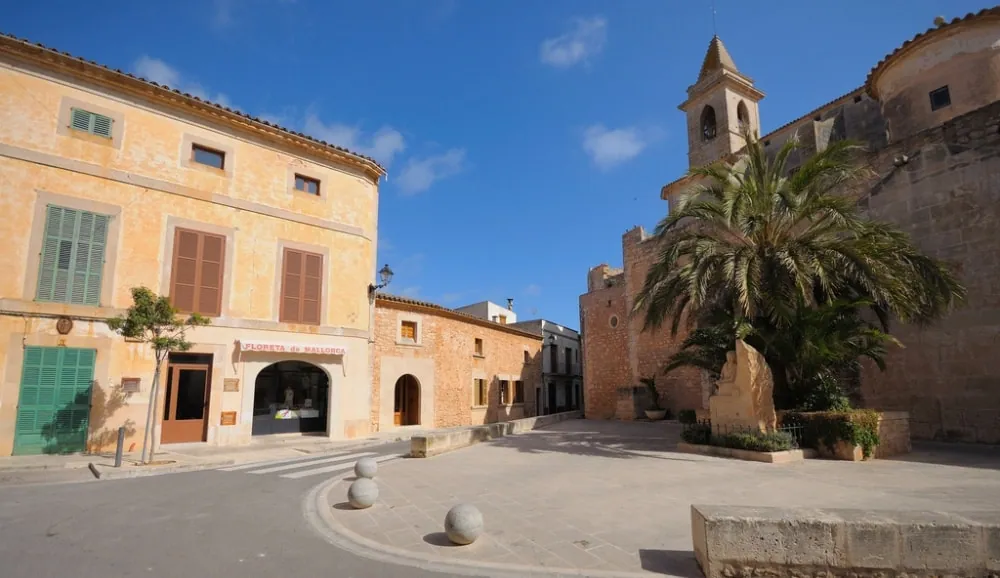
At the heart of the town sits Plaça Major, dominated by the 18th-century parish church of Sant Andreu Apòstol. The church houses a famous Baroque pipe organ completed around 1765 by the Mallorcan master craftsman Jordi Bosch. Originally built for the Santo Domingo convent in Palma, the organ was transferred to Santanyí following the 1837 ecclesiastical confiscations and remains a centrepiece for international organ recitals.
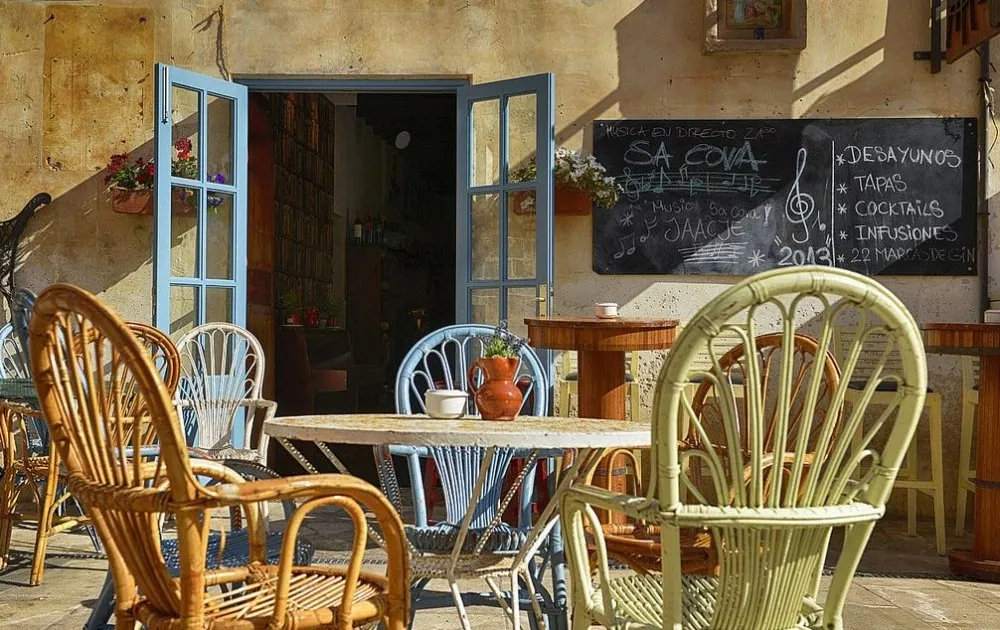
Every Wednesday and Saturday morning from 09:00 to 14:00, Plaça Major hosts one of Mallorca’s most popular street markets, offering organic produce, local crafts, and artisanal leather goods. Surrounding the square, established establishments such as Sa Cova Bar i Tapes (Plaça Major 30) serve tapas and local wines Monday through Saturday from 10:00 to 24:00.
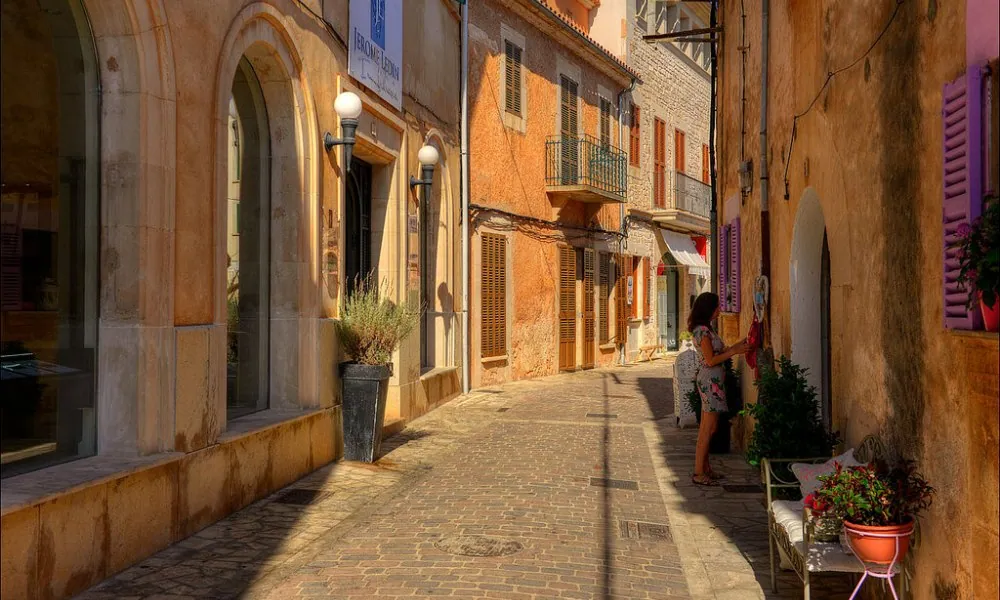
Santanyí also supports a sophisticated cultural calendar. The annual XIV Festival Internacional de Música Vila de Santanyí runs from May to October 2026, presenting six free concerts featuring symphonic orchestras and chamber ensembles across historic local venues. Cultural celebrations are further anchored by the traditional Sant Antoni festival on 16–17 January, marked by evening bonfires (foguerons) and public gatherings.
Which beaches, natural parks and golf courses surround Santanyí?
While Santanyí town sits inland, its municipal boundary encompasses some of south-eastern Mallorca’s most pristine coastal areas.
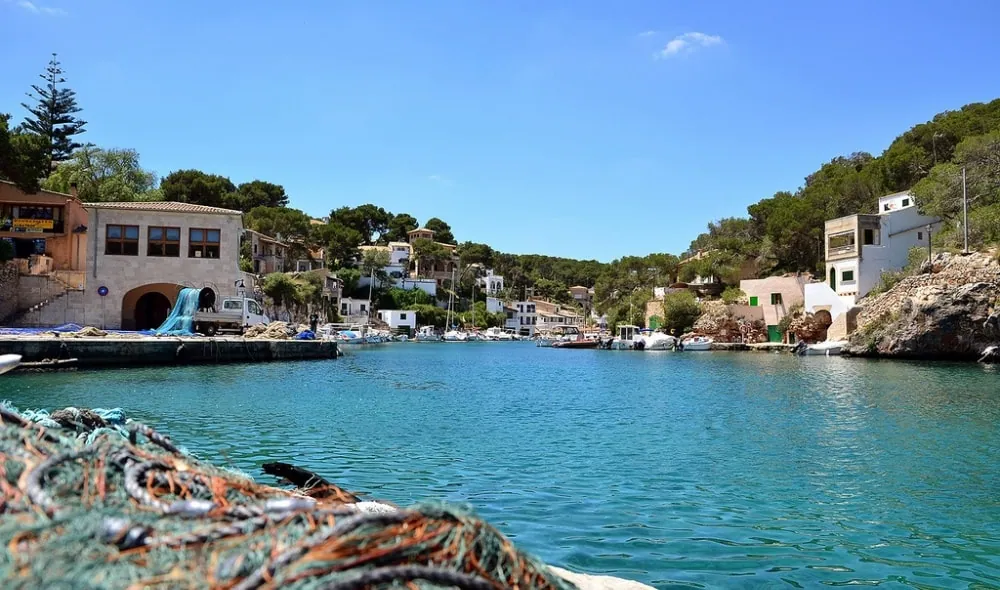
Just 5 km east of town lies Cala Figuera, a working fishing village defined by narrow inlets, traditional llaüt boats, and whitewashed boathouses with green wooden shutters.
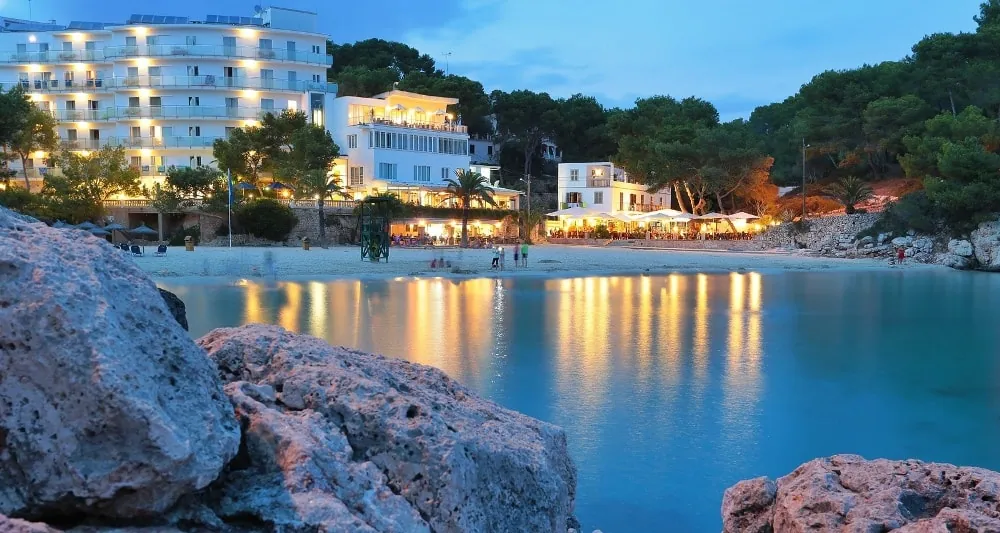
Six kilometres to the south-east, Cala Santanyí provides a sheltered sandy bay suited to swimming and paddleboarding, surrounded by pine-clad cliffs.
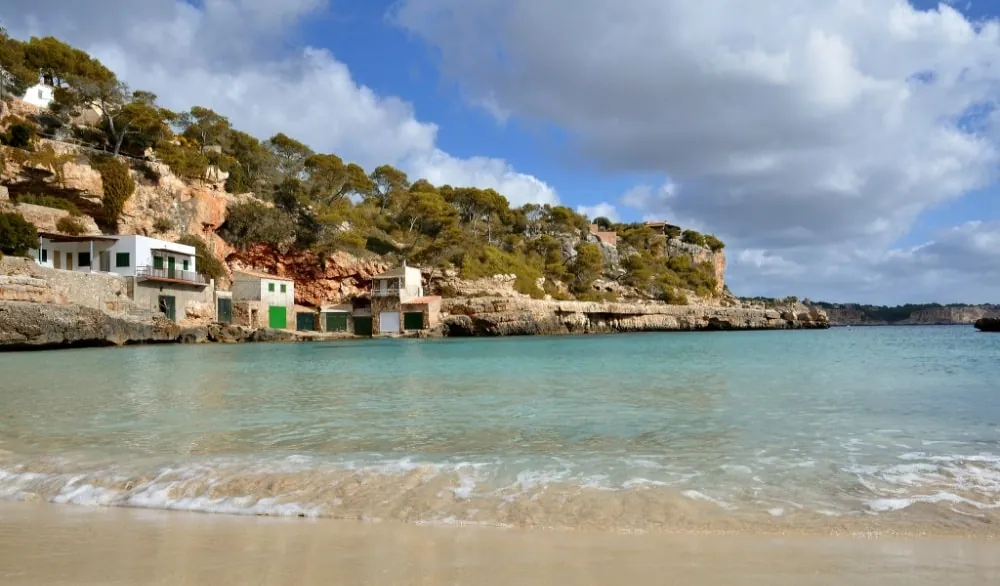
Further south, Cala Llombards offers a turquoise cove enclosed by steep rocky headlands, popular among local residents and international visitors alike.
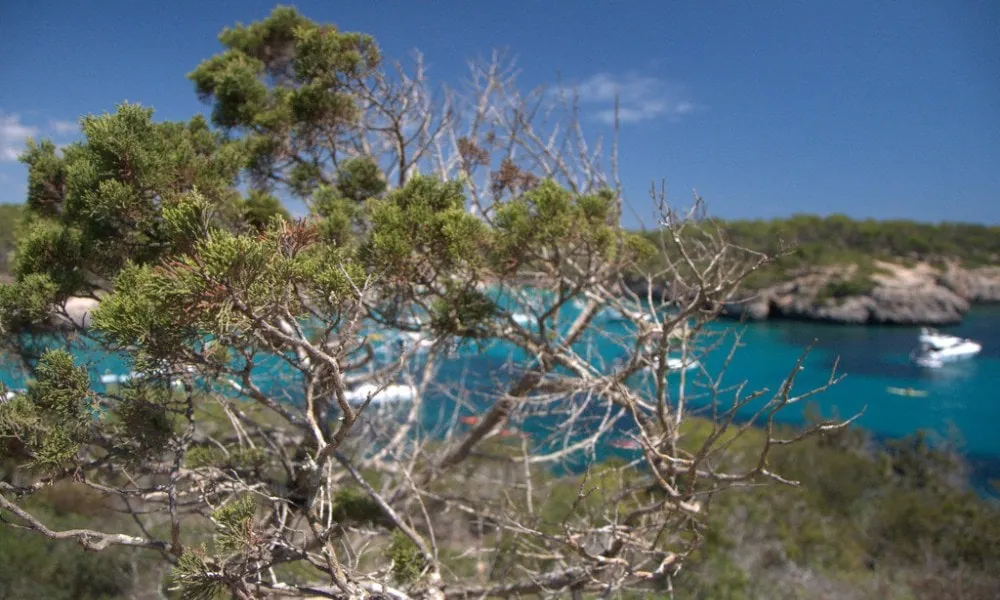
Nature conservation plays a crucial role in maintaining local property values. Established under Decree 85/1992, the Parc Natural de Mondragó protects 766 hectares of coastal pine forests, dune systems, and wetlands within the municipality, according to Govern de les Illes Balears environmental statistics. This protected classification prevents commercial high-rise development across adjacent beaches such as Ses Fonts de n’Alis and S’Amarador.
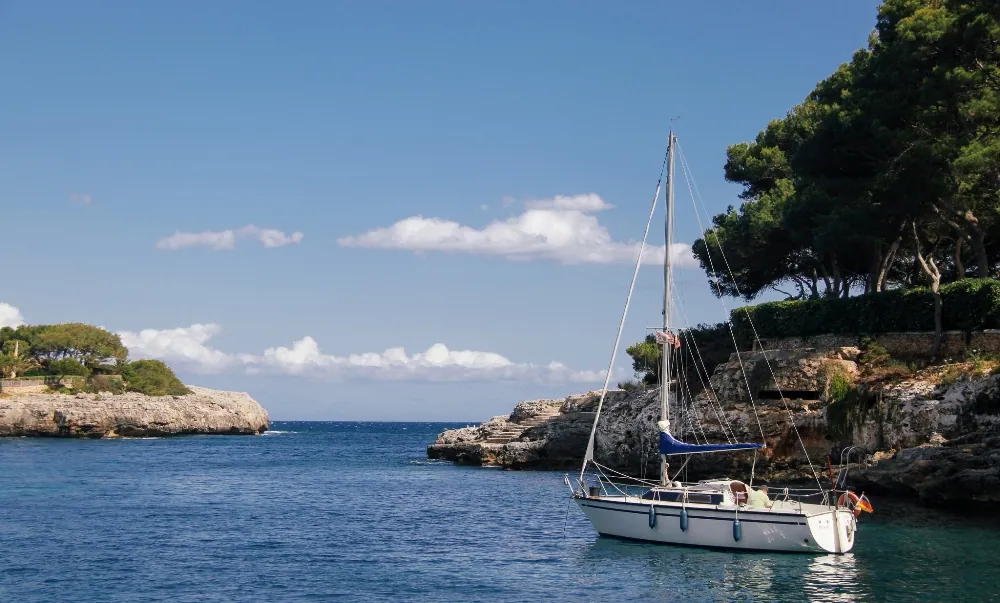
To the north-east, the resort area of Cala d’Or features marina facilities, boutique shops, and sandy coves including Cala Ferrera and Cala Serena.
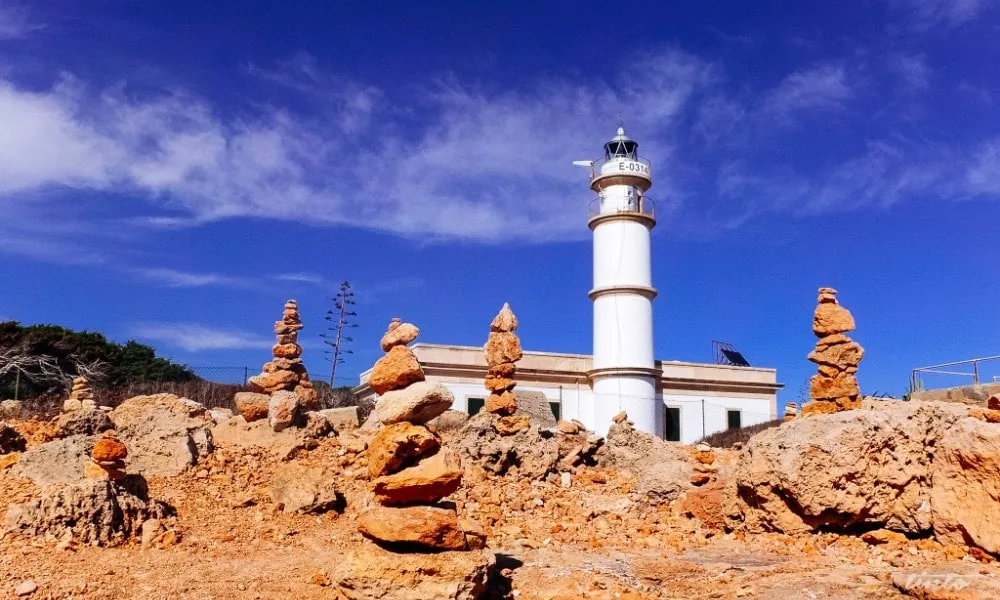
Southward hiking trails extend towards the lighthouse at Cap de Ses Salines and the untouched beaches of Colònia de Sant Jordi. Golf enthusiasts can access the 18-hole Vall d’Or Golf course in S’Horta (Felanitx), situated 14 km north of Santanyí town (a 15-to-20-minute drive). Investors evaluating rental asset strategies across the region can review our insights on owning a rental property in Mallorca and Ibiza.
What taxes, planning laws and rental rules apply to Santanyí buyers in 2026?
Purchasing residential real estate in Santanyí involves navigating specific fiscal tariffs and regional planning legislation.
Balearic Property Transfer Tax (ITP)
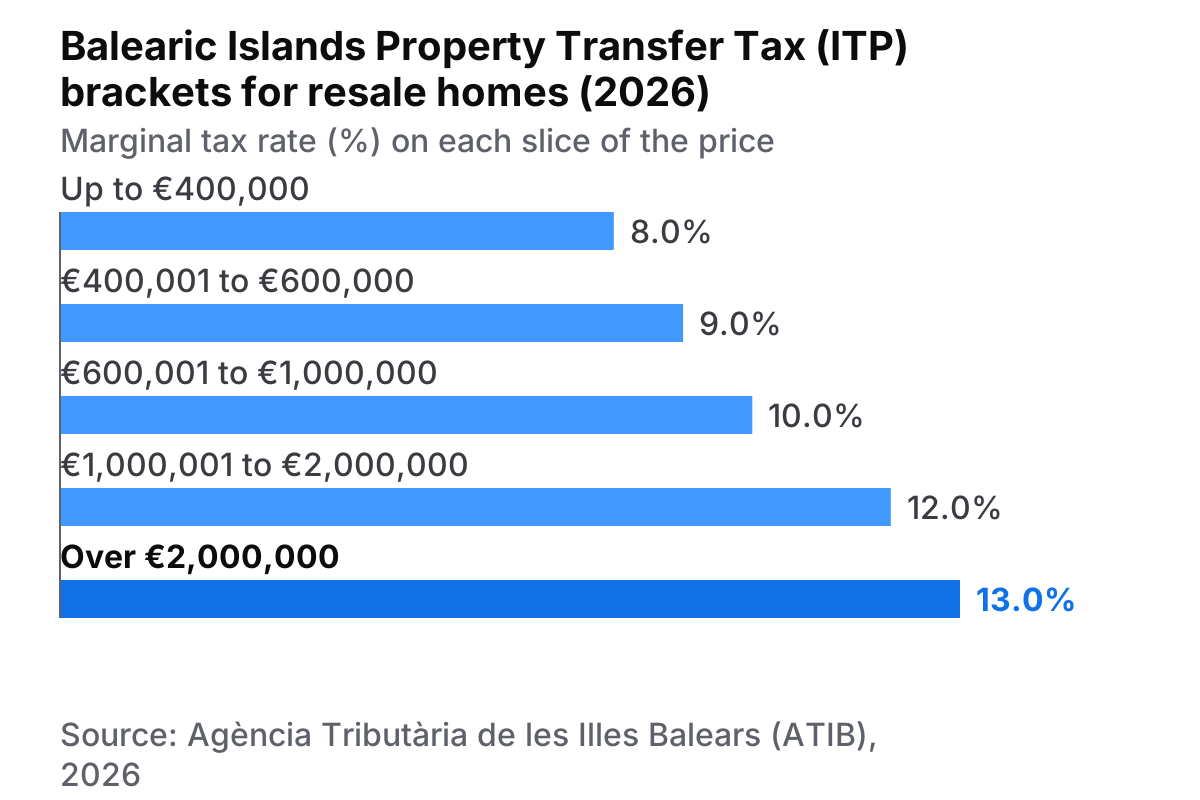
When buying a resale property in Mallorca, purchasers pay Property Transfer Tax (Impuesto sobre Transmisiones Patrimoniales - ITP). As confirmed by the Balearic Tax Agency (ATIB) ITP rates, ITP operates on a progressive scale based on the property’s value:
- Up to €400,000: 8%
- €400,000.01 to €600,000: 9%
- €600,000.01 to €1,000,000: 10%
- €1,000,000.01 to €2,000,000: 12%
- Over €2,000,000: 13%
Building Regulations on Rural Land (Suelo Rústico)
For investors interested in constructing or extending a country finca on general rural land (Suelo Rústico General) under the Insular Territorial Plan (PTIM) and Balearic Decree-Law 3/2024, strict parameters apply:
- Minimum plot size: 14,000 m² (rising to 21,000 m² in Areas of Architectural Interest - AIA, and 50,000 m² in Rural Areas of Protected Interest - ARIP).
- Maximum buildability: 1.5% of total plot area (1.0% in ARIP or Natura 2000 land).
- Maximum plot occupancy: 2.0% (1.5% in protected zones).
- Maximum building volume: Strict cap of 900 m³ for single-family residences.
Tourist Rental Licences (ETV Moratorium)
Under Balearic Decree-Law 4/2025, new holiday rental licences (ETV) in multi-family residential apartment buildings are banned across the archipelago. The island-wide bed cap remains frozen on a strict 1:1 replacement basis. Buyers seeking to operate short-term holiday rentals in single-family townhouses or detached villas must either acquire a home with an existing, fully valid ETV licence or apply during periodic Consell de Mallorca bed allocation lotteries.
To analyze current market dynamics, verify asking price valuations, or examine historical listing metrics in Santanyí, real estate professionals and private buyers can utilize CASAFARI Area Insights and our automated property valuation and market study tool. Developers and technical teams seeking direct programmatic integration can review the Area Insights API documentation on developers.casafari.com, or simply sign in to the CASAFARI platform to access comprehensive Balearic market coverage.
In Summary
Santanyí combines rich medieval heritage, golden sandstone architecture, and proximity to protected natural parks like Mondragó. While strict rural planning laws and the Balearic holiday rental moratorium preserve the municipality’s exclusive atmosphere, purchasers must carefully account for progressive transfer tax rates up to 13%. Having accurate, real-time market data ensures buyers and estate agents make fully informed property decisions in south-east Mallorca.
Frequently asked questions
What are the rules for building a finca on rural land in Santanyí?
Under Mallorca’s Insular Territorial Plan (PTIM) and Balearic Decree-Law 3/2024, constructing a new detached home on general rural land (Suelo Rústico General) requires a minimum plot size of 14,000 m², rising to 21,000 m² or 50,000 m² in protected AIA and ARIP zones. Total buildability is capped at 1.5% of the plot area (1.0% in protected zones), maximum footprint occupancy is 2.0%, and total building volume cannot exceed 900 m³.
Can you get a tourist rental licence (ETV) for a property in Santanyí?
Obtaining a new tourist rental licence (ETV) in Santanyí is heavily restricted under Balearic Decree-Law 4/2025, which bans new holiday let licences in multi-family apartment buildings and freezes the total island bed cap. For single-family townhouses or detached villas, new licences are only obtainable when the Consell de Mallorca releases limited batches of retired or de-registered beds, leading most investors to buy homes with active existing ETV licences.
What is the property transfer tax (ITP) when buying a home in Mallorca?
In the Balearic Islands, Property Transfer Tax (ITP) on resale residential properties is calculated on a progressive scale. The rate starts at 8% for the first €400,000 of the purchase price, rising to 9% between €400,000.01 and €600,000, 10% between €600,000.01 and €1,000,000, 12% between €1,000,000.01 and €2,000,000, and 13% on any portion exceeding €2,000,000.
How far is Santanyí town from Palma de Mallorca and the airport?
Santanyí town is situated 49 to 52 kilometres south-east of Palma de Mallorca via the Ma-19 motorway, taking approximately 38 to 45 minutes by car and roughly 35 minutes from Palma Airport (PMI). Public bus connections operated by TIB (Line 501 connecting to Line 515, or the seasonal direct express Line 515e) provide a travel time between 75 and 90 minutes.