SANTANYI PROPERTY GUIDE
Outstandingly beautiful example of traditional Majorca
Santanyí, situated in south-eastern Mallorca, combines 13,067 residents across more than ten distinct settlements with 750 hectares of protected coastal parkland and strict rural planning constraints. According to the Instituto Nacional de Estadística (INE) municipal register, the population reached 13,067 in January 2025. Acquisition requires navigating progressive Balearic Property Transfer Tax (ITP) from 8% to 13%, minimum 14,000 m² plot requirements for rural construction, and a complete moratorium on new multi-family tourist rental licences.
Why are international buyers and investors drawn to Santanyí?
The municipality of Santanyí stands as one of Mallorca’s most sought-after residential enclaves. Rather than relying on high-density resort infrastructure, the district retains a distinctive architectural identity characterised by honey-coloured marès sandstone (pedra de Santanyí), restored rural fincas, and low-rise coastal villas.
Unlike purely seasonal holiday destinations, Santanyí town maintains strong year-round activity, supported by its twice-weekly market on Wednesdays and Saturdays, a network of independent art galleries, and established gastronomy. Beyond the main town, the municipality encompasses more than ten distinct population centres, offering diverse options ranging from quiet agricultural hamlets to full-service yachting harbours. Buyers and real estate professionals can examine real-time district ask prices and stock velocity via the live price ticker at the top of this page.
How do the towns and villages of the Santanyí region compare?
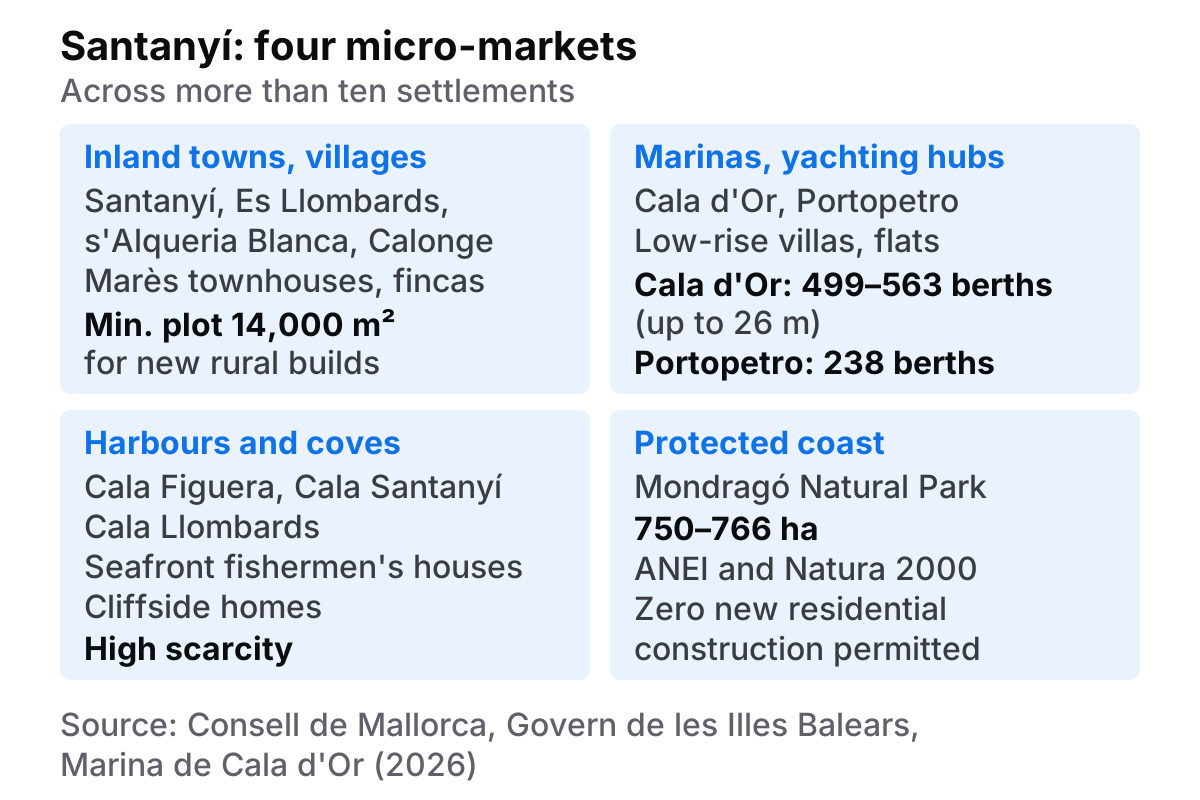
To evaluate property opportunities in Santanyí, investors and estate agents must differentiate between four primary micro-markets within the municipality:
- Inland Towns and Villages: Santanyí town serves as the cultural hub, where restored stone townhouses with courtyard gardens predominate. Nearby villages such as Es Llombards, s’Alqueria Blanca, and Calonge appeal to buyers seeking authentic country fincas and village houses featuring panoramic views toward the coast or the monastery hill of San Salvador.
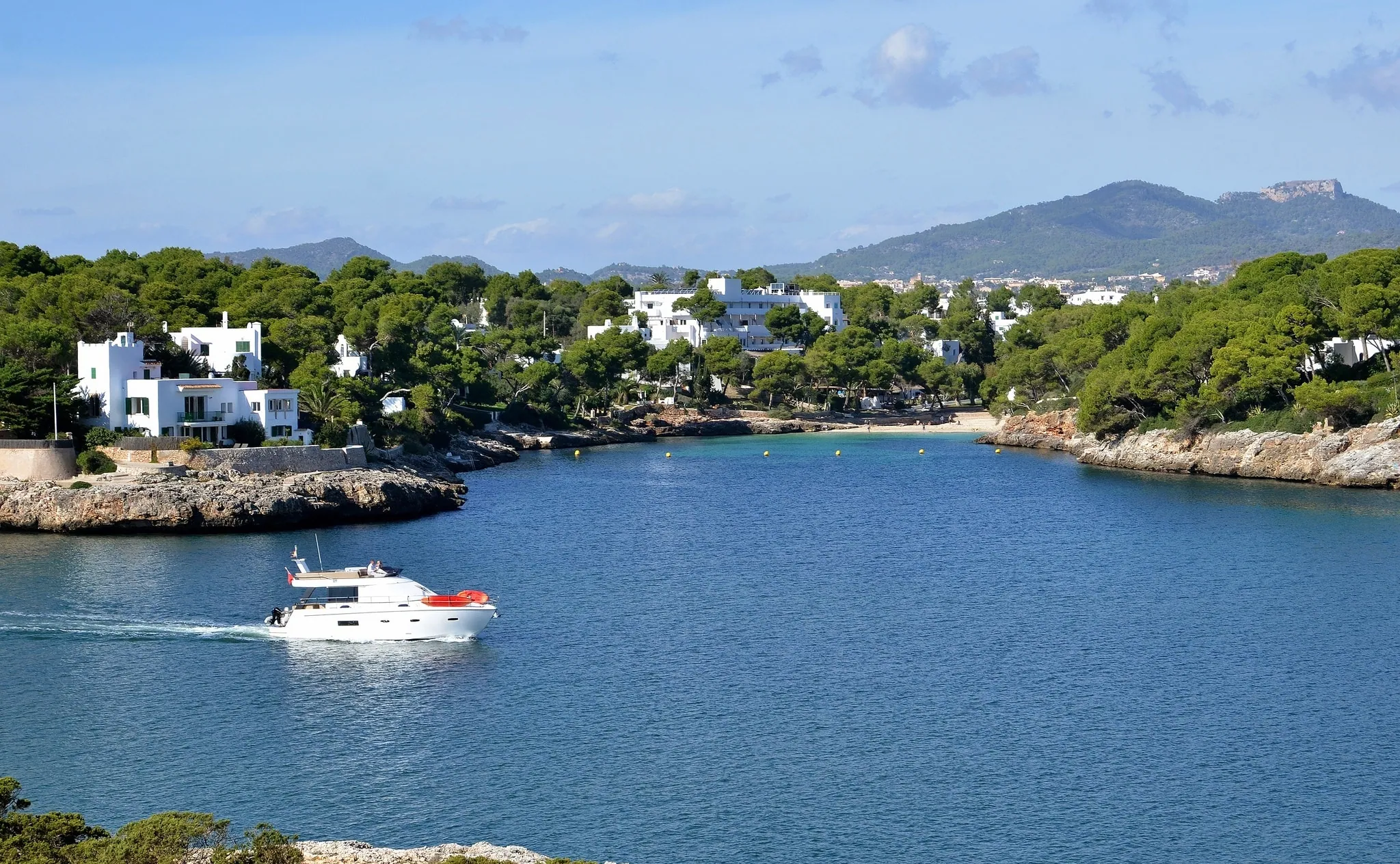
- Marinas and Yachting Hubs: Cala d’Or features low-rise, Ibizan-inspired whitewashed architecture arranged around deep bays. The Marina de Cala d’Or technical specifications confirm 499 to 563 berths for vessels up to 26 metres in length, supported by a 30,000 m² boatyard. To the south, Portopetro provides a quieter harbour environment, anchored by the Reial Club Nàutic Portopetro offering 238 berths for vessels between 12 and 20 metres.
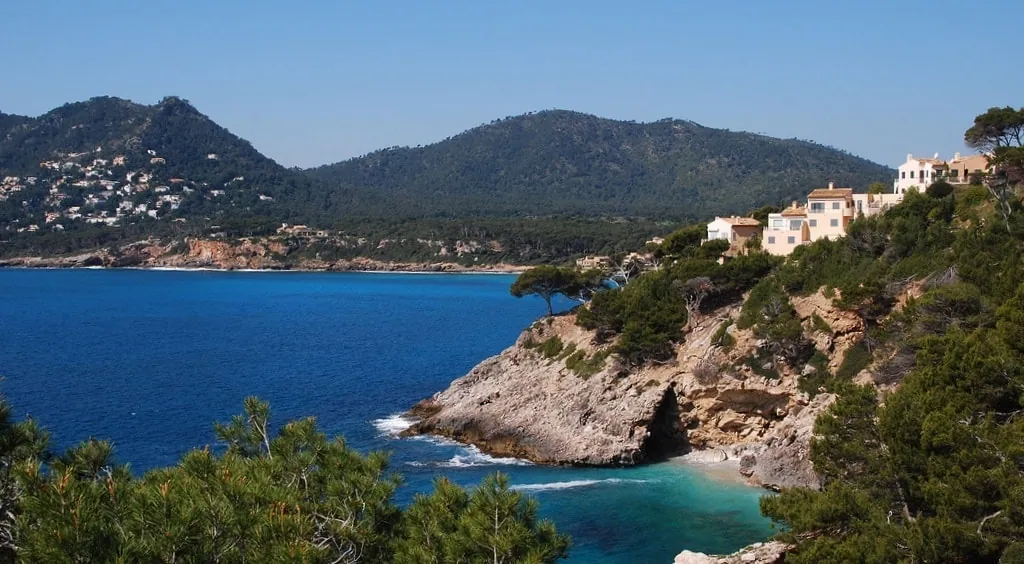
- Fishing Harbours and Coves: Cala Figuera offers a dramatic Y-shaped natural fjord lined with traditional fishermen’s engine houses (escars) and wooden llaüts. Surrounding residential areas like Cala Santanyí and Cala Llombards consist primarily of detached villas positioned along rugged limestone cliffs.
- Protected Nature Reserves: The Mondragó Natural Park covers 750 to 766 terrestrial hectares (95 hectares under public ownership) between Portopetro and Cala Figuera, as documented by the Govern de les Illes Balears Mondragó Natural Park overview. Declared a Natural Park in 1992 and protected under ANEI and Natura 2000 designations, strict environmental rules prohibit new residential builds across its terrain, preserving extreme scarcity for existing legal homes in its buffer zone.
What are the rules for building or renovating a rural finca in Santanyí?
Constructing a new country home or extending an existing estate in Santanyí’s rural hinterland (suelo rústico) is governed by rigorous Balearic planning frameworks (LUIB and Decreto-ley 9/2020). These regulations protect the island’s landscape while underpinning the long-term value of legally established properties.
According to the Consell de Mallorca rural building requirements, the core parameters for detached single-family residential developments include:
- Minimum Plot Size: A minimum continuous area of 14,000 m² (equivalent to two local quarterades) is mandatory on general rural land. This threshold increases to 50,000 m² in designated areas of landscape interest or general forestry. New residential construction is prohibited entirely in protected zones such as ANEI, AANP, APT, or ARIP-B.
- Buildability and Footprint Caps: Building surface area is capped at a maximum buildability of 1.5% of the total plot surface, with maximum ground-level occupancy limited to 2%.
- Volume Limitation: The total enclosed building volume across all structures on the plot cannot exceed 900 m³.
- Swimming Pool Restrictions: Under Article 68 bis of the LUIB, a plot may feature at most one swimming pool, with a maximum water surface area of 35 m² and a total water volume capped at 60 m³.
Due to these dimensional restrictions, acquiring existing legal properties often presents a faster route to market than ground-up construction. Real estate agents use CASAFARI Property Sourcing to aggregate un-duplicated inventory across local portals, while tracking rural plot transactions using CASAFARI Area Insights.
How do property taxes, holiday rental licences and residency rules work in 2026?
Acquiring and holding real estate in Mallorca involves specific regional taxation and administrative frameworks that international buyers must account for prior to submitting a formal offer.
Balearic Property Transfer Tax (ITP)
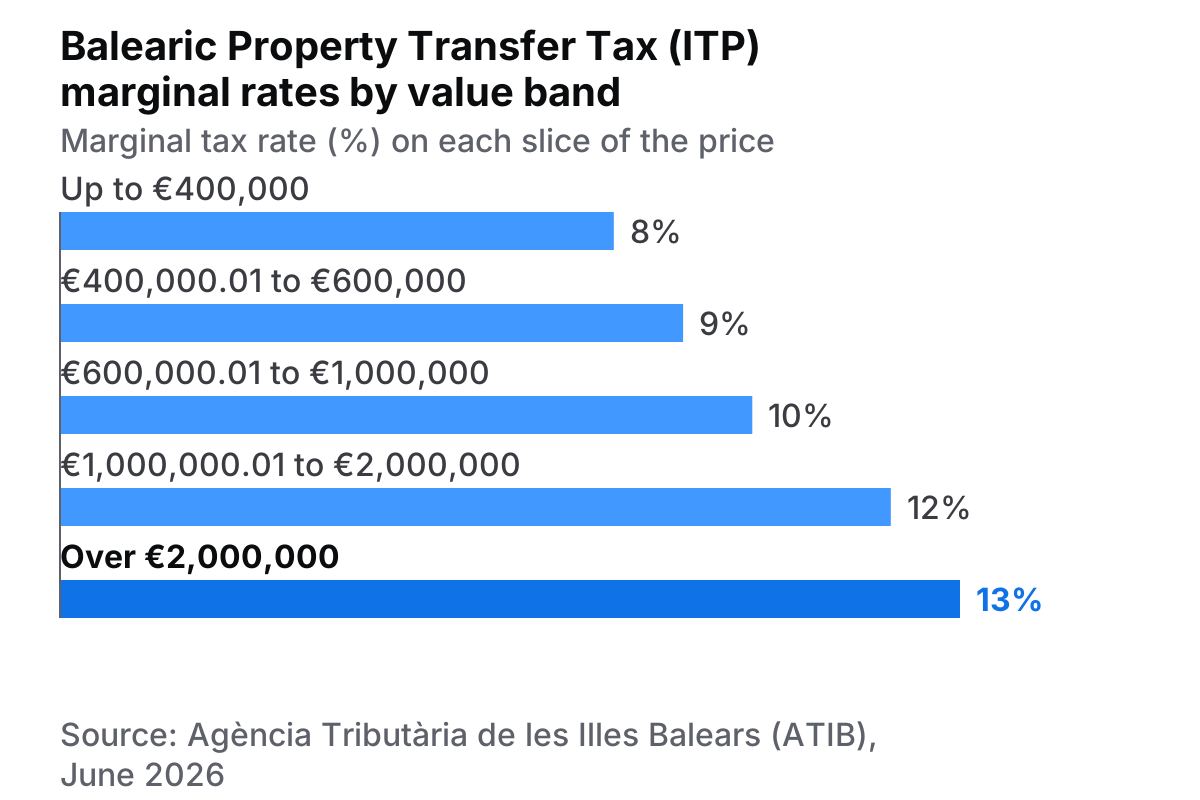
When purchasing resale residential property, buyers pay the Impuesto sobre Transmisiones Patrimoniales (ITP). The tax is calculated on a progressive scale based on property value, as published by the Agència Tributària de les Illes Balears (ATIB) ITP tax bands:
| Value Band | ITP Marginal Tax Rate |
|---|---|
| Up to €400,000 | 8% |
| €400,000.01 to €600,000 | 9% |
| €600,000.01 to €1,000,000 | 10% |
| €1,000,000.01 to €2,000,000 | 12% |
| Amount Exceeding €2,000,000 | 13% |
Reduced ITP rates (down to 4%, 2%, or full exemption) apply exclusively to qualifying primary residences under strict age and price caps.
Wealth Tax Thresholds
Under the ATIB Balearic Wealth Tax rules, the individual tax-free allowance for Impuesto sobre el Patrimonio stands at €3,000,000 per person (plus up to €300,000 for a primary residence). Non-resident property owners in Mallorca can elect to apply this regional threshold. Net assets above €3,000,000 are taxed on a progressive scale ranging from 0.28% to 3.45%.
Tourist Rental Licences (ETV)
Under Decreto-ley 4/2025 and the regional framework maintained by the Consell de Mallorca tourist rental zoning (PIAT), Mallorca enforces a zero-growth policy on tourist beds. New ETV short-let licences are prohibited in multi-family apartment buildings across the islands. Investors targeting vacation rental income must purchase a detached single-family home that retains an existing, transferable ETV licence. For more details on yield structures, consult our guide on owning a rental property in Mallorca and Ibiza.
Abolition of the Golden Visa
Spain permanently abolished its Golden Visa real estate residency programme under Organic Law 1/2025, published in the Organic Law 1/2025 in the Boletín Oficial del Estado (BOE). Since 3 April 2025, purchasing property worth €500,000 or more no longer confers Spanish residency rights. Non-EU buyers now manage residency via standard Schengen limits (90 days in any 180-day window) or non-lucrative and digital nomad visas. To review the legal steps of standard conveyance, read our detailed guide to the Spanish property purchase contract and escritura.
How well connected is Santanyí for year-round living?
Santanyí combines a quiet Mediterranean environment with direct transport links to Palma and international transit hubs.
- Road Connections: Palma de Mallorca Airport (PMI) is located 46 km from Santanyí via the Ma-19 dual carriageway through Llucmajor and Campos, requiring 38 to 45 minutes by car. Central Palma lies 52 to 58 km away.
- Public Transit: TIB express bus route A51 connects Palma Airport directly to Campos, where passengers connect to TIB line 515. As shown on the TIB line 515 bus timetable, line 515 provides scheduled connections between Campos, Santanyí town, s’Alqueria Blanca, Portopetro, and Cala d’Or.
- International Education: While the majority of international schools are situated around Palma and Calvià, families living in Santanyí have access to the Rafa Nadal International School in Manacor, located 31 km to the north. The school offers an English-taught British curriculum through Year 6 and an American High School Diploma curriculum for Grades 7 to 12.
Whether evaluating rural building land or benchmarking asking prices across south-eastern Mallorca, professional investors and agents rely on data-driven valuation tools. Assess local pricing dynamics with the property valuation and market study tool or sign in to the CASAFARI platform to analyse historical transaction trends.
Frequently asked questions
How much land do you need to build a rural finca in Santanyí?
Under Consell de Mallorca and LUIB regulations, building a new detached house on general rural land requires a minimum plot of 14,000 m², increasing to 50,000 m² in areas of landscape interest. Total enclosed building volume cannot exceed 900 m³, maximum buildability is capped at 1.5% of the plot area, and swimming pools are limited to one per property with a maximum 35 m² water surface. Residential construction is completely prohibited in protected ANEI zones such as Mondragó Natural Park.
Can I get a holiday rental licence (ETV) for a property in Santanyí?
Mallorca enforces a zero-growth moratorium on tourist beds under Decreto-ley 4/2025 and the regional PIAT planning rules. New ETV holiday rental licences are prohibited in multi-family apartment buildings across the Balearic Islands. To operate a legal tourist rental property in Santanyí, buyers must acquire a detached or semi-detached property that already holds an active, valid ETV licence.
What are the property transfer and wealth taxes in Mallorca?
Resale property acquisitions in Santanyí attract Balearic Property Transfer Tax (ITP) on a progressive scale from 8% on values up to €400,000 up to 13% on the portion exceeding €2,000,000. For ongoing property ownership, the Balearic Wealth Tax provides an individual tax-free allowance of €3,000,000 per taxpayer. Non-resident owners may also elect to apply this regional €3,000,000 tax-free threshold to their Balearic property assets.
Is Spain’s Golden Visa still available when buying property in Mallorca?
No. Spain permanently abolished the Golden Visa residency route for property investments under Organic Law 1/2025, which came into force on 3 April 2025. Non-EU buyers acquiring property in Santanyí must comply with standard Schengen regulations allowing stays of up to 90 days in any 180-day period, or apply for non-lucrative or digital nomad visas for long-term residence.