
Buying property in Spain: how to search for homes for sale
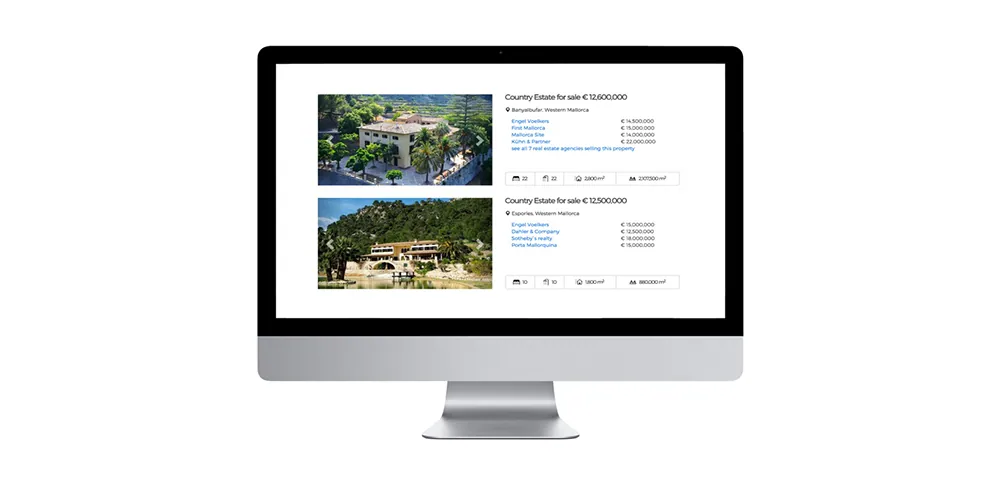
Finding a home for sale in Spain requires defining a budget including taxes and additional costs, setting location and size criteria, configuring search alerts, researching the local environment and climate, and comparing offers from multiple agencies. In areas like Majorca, a 2016 study by CASAFARI revealed that asking prices for the same property varied in 10% of cases (by 28% on average). In this guide, we explain the six steps to buying a property in Spain and finding your ideal home.
a. Preparing the ground
Finding your dream home is the first major step in purchasing property. This phase requires a substantial investment of time: researching the area, contacting real estate agents, choosing whom to work with, attending viewings, and gathering additional details on chosen properties.

In July 2020, according to interviews conducted by CASAFARI with buyers and investors, only 60% of agents spoke the buyer’s native language, and over 70% listed properties without having seen them in person.
As a buyer, you must be extremely precise in your search, which is why investors increasingly rely on a buying agent to handle much of this workload. The client pays no additional fees, as buying agent fees are split with the listing estate agency.
Their role involves researching the area, selecting listing agencies to partner with, assisting with the final acquisition, and following through. Unfortunately, most buyers are unaware that traditional estate agents are retained by the seller, creating a potential conflict of interest that compromises neutrality.
When you begin your search, your first priority is to establish a budget that accounts for taxes and extra fees. Secondly, ensure your budget aligns with your location and size criteria. Precision is essential, as property value directly depends on size and location.
This groundwork streamlines your search and ensures you buy the right home for your needs, rather than the property a seller wants to offload.
b. Starting the search process
Once your budget, location criteria, and property type are defined, and your initial search alerts are active, the market analysis phase begins.
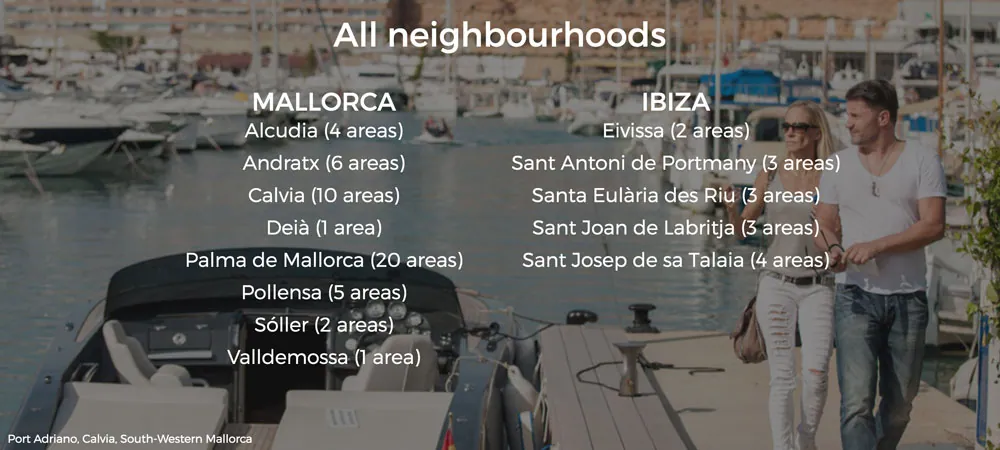
First, gather all available information about the area online and from other sources. Researching regional guides manually can consume considerable time, which is why we created our neighbourhood guides to provide a comprehensive overview of every region and town across the Balearic Islands.
Sourcing properties is often the most demanding stage, requiring significant investments of time and resources. According to our 2016 research, Majorca alone had over 15,000 individual properties on the market across various estate agencies.
Multi-listing practices lead to information discrepancies regarding asking prices and property specifications. Below is a summary of our findings:
In 10% of cases, asking prices varied (by 28% on average);
In 16% of cases, bedroom count differed (by 1 on average);
In 25% of cases, bathroom count differed (by 2 on average);
In 28% of cases, floor area details differed (by 6% on average);
In 39% of cases, plot size details differed (by 136 square metres on average);
In 83% of cases, terrace surface area differed (by 8% on average).
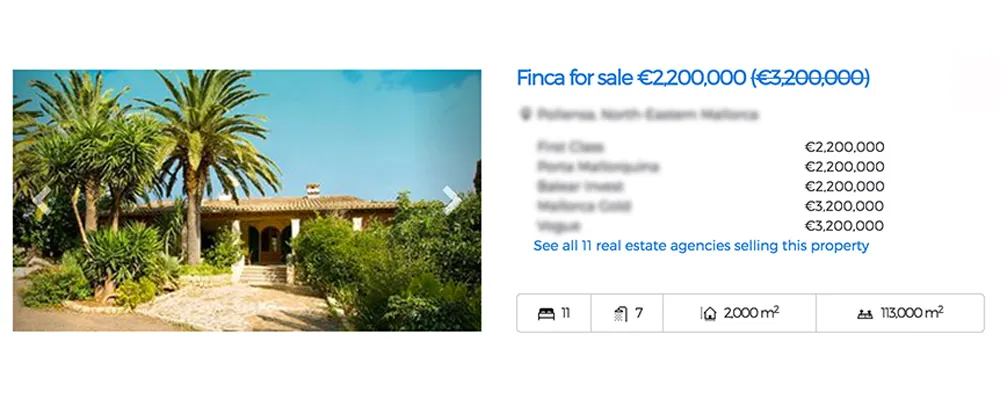
What does this mean in practice? Because sole agency agreements are rare in this market, obtaining accurate information traditionally requires checking every agency listing a given property. Given the sheer number of agencies, sellers do not always update every broker when asking prices change.
At times, agencies are not in direct contact with the vendor, leading to inaccurate listing details. To save time and resources during your search, use CASAFARI Property Sourcing. Our platform aggregates and de-duplicates thousands of listings while analysing local market trends, giving you a clear overview of asking price distributions and helping you decide which agency to contact.
Aim to gather details on a property from as many sources as possible and compare prices per square metre across the area. Thoroughly examining asking price dynamics will give you the confidence to make an informed decision. Remember that real estate represents one of the strongest investment opportunities when you select the right location and property type.
Ultimately, whether you work with a buying agent or conduct the search independently, you are the decision-maker who selects the right property to inspect and potentially acquire.
c. Setting up search alerts
To stay informed, set up email search alerts to receive automatic notifications whenever a new property is listed. Remember that competing buyers are searching for similar opportunities; technology provides a distinct advantage in spotting them first. You can also monitor classifieds, property portals, and agency websites.
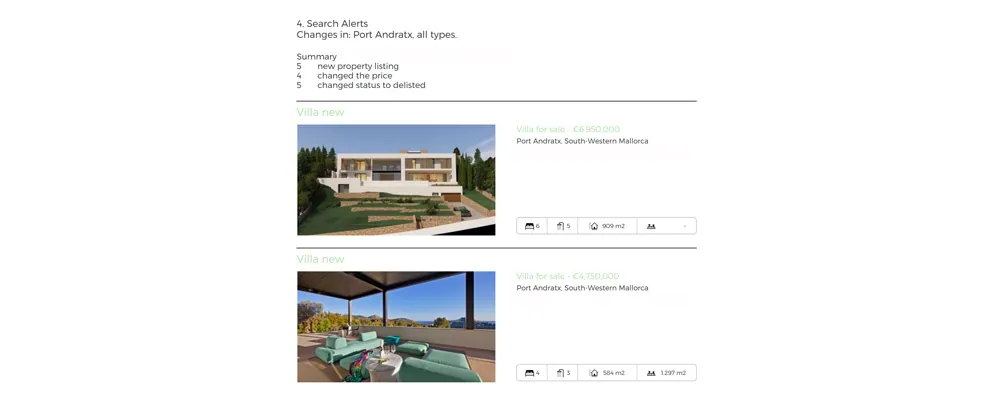
However, review early alerts carefully to verify that the listings meet your core criteria, as initial results may include broad property selections that do not match your precise requirements.
d. Researching the local area
Understanding the location is crucial. Here are the key factors to evaluate when selecting an area:
Assess the local surrounding infrastructure:
1. Distance to the nearest airport
2. Are there fine dining restaurants, golf and yacht clubs, secluded beaches, and boutique hotels, or is the area dominated by nightlife, high-volume resorts, and large hotels?
3. What architectural styles define the neighbourhood? Bauhaus villas, traditional fincas, or apartment complexes?
4. What is the quality of local healthcare facilities, hospitals, and clinics?
5. How many local supermarkets are nearby, and at what distance?
6. Are international schools or universities nearby for families with children?
7. Are suitable sports and leisure facilities available locally to support your lifestyle?
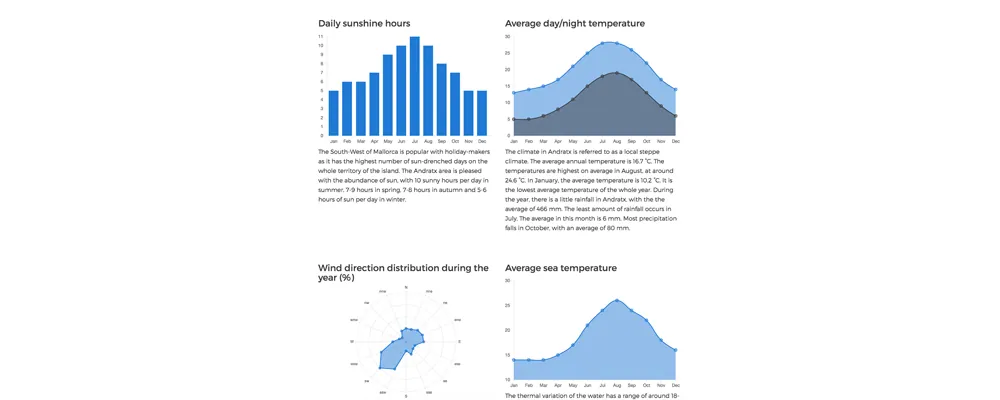
Research the local climate:
1. Annual and monthly sunny days
2. Average monthly rainfall
3. Prevailing winds — whether cold, warm, dry, or humid — as local wind patterns affect comfort levels
4. Average annual air and sea temperatures
5. Solar exposure, particularly during winter months, as it influences indoor humidity and natural light
If your second home is an investment you might sell in future, reviewing planning permissions and development plans with local authorities is essential. Discovering a new hotel construction blocking your view or facing long-term construction noise after purchasing can severely diminish enjoyment and value.
Choose your neighbourhood thoughtfully to ensure it matches your lifestyle preferences, whether you prefer an international community or a traditional local setting.
Examine available local activities; Majorca, for instance, offers a wide selection of leisure pursuits suited to all ages.
Crucially, research nearby beaches and their proximity. Consider peak seasonal crowding, visitor demographics, and safety standards.
These factors are interconnected and directly influence your overall satisfaction and comfort in your home.
e. Visiting the area and inspecting properties
Once you have researched the area and compiled a shortlist of suitable homes, plan your trip. Before booking flights to Majorca, select a season with suitable weather conditions so you can thoroughly inspect every aspect of the property without unseasonal rain dampening your initial impression.
Request clear, recent photographs from estate agents beforehand so you know exactly what to expect during viewings.
Spend time exploring your preferred neighbourhood and speak with local residents to gather firsthand insights that inform your decision.
f. Asking key questions and conducting detailed inspections
When viewing the property, request the following documentation from the agent:
1. Floor plans, property descriptions, and utility details (water, gas, heating), where available
2. A summary of property features and community amenities
3. Details regarding construction materials and structural elements
In addition, evaluate physical characteristics and inquire about:
1. Solar exposure and prevailing wind patterns across different seasons
2. Windows requiring seasonal shading or wind protection
3. Natural light levels during winter
4. Winter dampness; check walls, basements, and shaded areas carefully
5. Date of the most recent renovation
6. Age and condition of electrical wiring and plumbing systems
7. Water supply source — whether mains connection or private supply
8. Ambient noise levels
Finally, ask the agent or seller any remaining questions about the home and neighbourhood. Clarify post-purchase procedures and inquire about adjacent property owners.
Ultimately, property sourcing is a process of comparison, close inspection, and thorough due diligence.
You can work with an agent at any point and hire a chartered surveyor for a formal building survey. While buyers sometimes attempt the process unassisted, statistics show this frequently leads to unnecessary expenditures of time and capital.
Frequently asked questions
Why is the same property in Spain listed at different asking prices?
Because sole agency agreements are uncommon in the Spanish market, sellers frequently list properties with multiple agencies. When vendors adjust asking prices, they do not always inform every broker simultaneously. In a 2016 CASAFARI study of over 15,000 listings in Majorca, asking prices for identical properties varied in 10% of cases (by 28% on average), while floor area figures differed in 28% of cases.
What does a buying agent do and who pays their fees?
A buying agent researches target locations, identifies listing agencies, manages viewings, and guides the buyer through acquisition. Their representation eliminates the conflict of interest inherent in working solely with seller-retained agents. Buyers incur no additional costs, as the buying agent splits the sales commission with the listing agency.
What local factors should be evaluated before buying a second home in Spain?
It is advisable to check proximity to airports, hospitals, supermarkets, and international schools, while assessing local amenities and neighbourhood atmosphere. Evaluate climate conditions (annual sunshine hours, winter sun position, humidity, prevailing winds) and consult municipal planning offices to verify whether future developments could impact views or surroundings.
What should be inspected and asked during a property viewing?
Request floor plans, building material specifications, and details regarding water, electricity, gas, and heating systems. Check natural light in winter, inspect walls and basements for dampness, evaluate wind exposure and noise levels, and determine the age of utilities and recent renovations.
How does CASAFARI help compare properties and set up search alerts?
CASAFARI aggregates and de-duplicates listings across thousands of estate agencies, presenting accurate asking prices and specifications in a unified property feed. Users can analyze price per square metre across regions and set up email alerts via the CASAFARI platform to receive notifications when matching properties hit the market.