
How CASAFARI Built a Mobile-First Experience with its Real Estate Data API
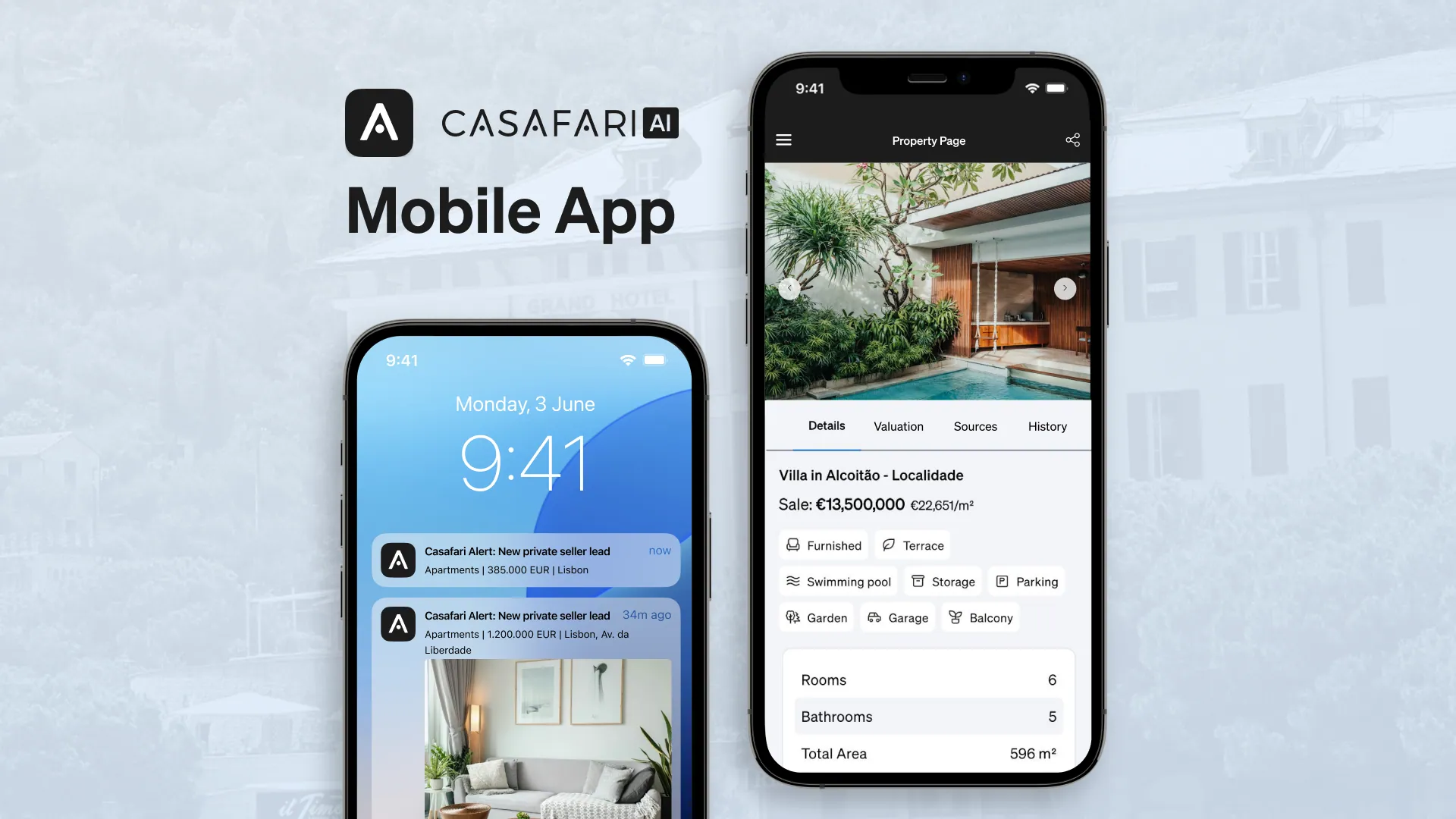
CASAFARI built its mobile real estate application by integrating 80–85% of the endpoints in the CASAFARI Property Data API. The app delivers on-the-go market access, enabling real estate professionals and private clients to perform real-time property sourcing, inspect listing history, and access instant valuations backed by official closing prices directly from their mobile devices.
Why did CASAFARI build a mobile real estate app with its API?
The Project
The company originally built a robust web platform serving a wide range of real estate professionals. However, recognising the growing need for on-the-go market access, they developed a mobile app designed to keep users connected with the real estate market at all times.
“We wanted our clients to have Casafari in their pocket — to always stay in touch with the market, track updates, and access property data instantly,” said Demian Liakh, QA Team Lead.
The mobile app leverages the advantages of CASAFARI’s Property Data API in every single product feature it offers, from Property Sourcing to Property Valuation. Users can find the properties for personal usage or investment using Property Sourcing. No matter if you search properties for commercial needs or for residential – Casafari API allows you to build a product that can cover these types of properties.
Key Use Cases
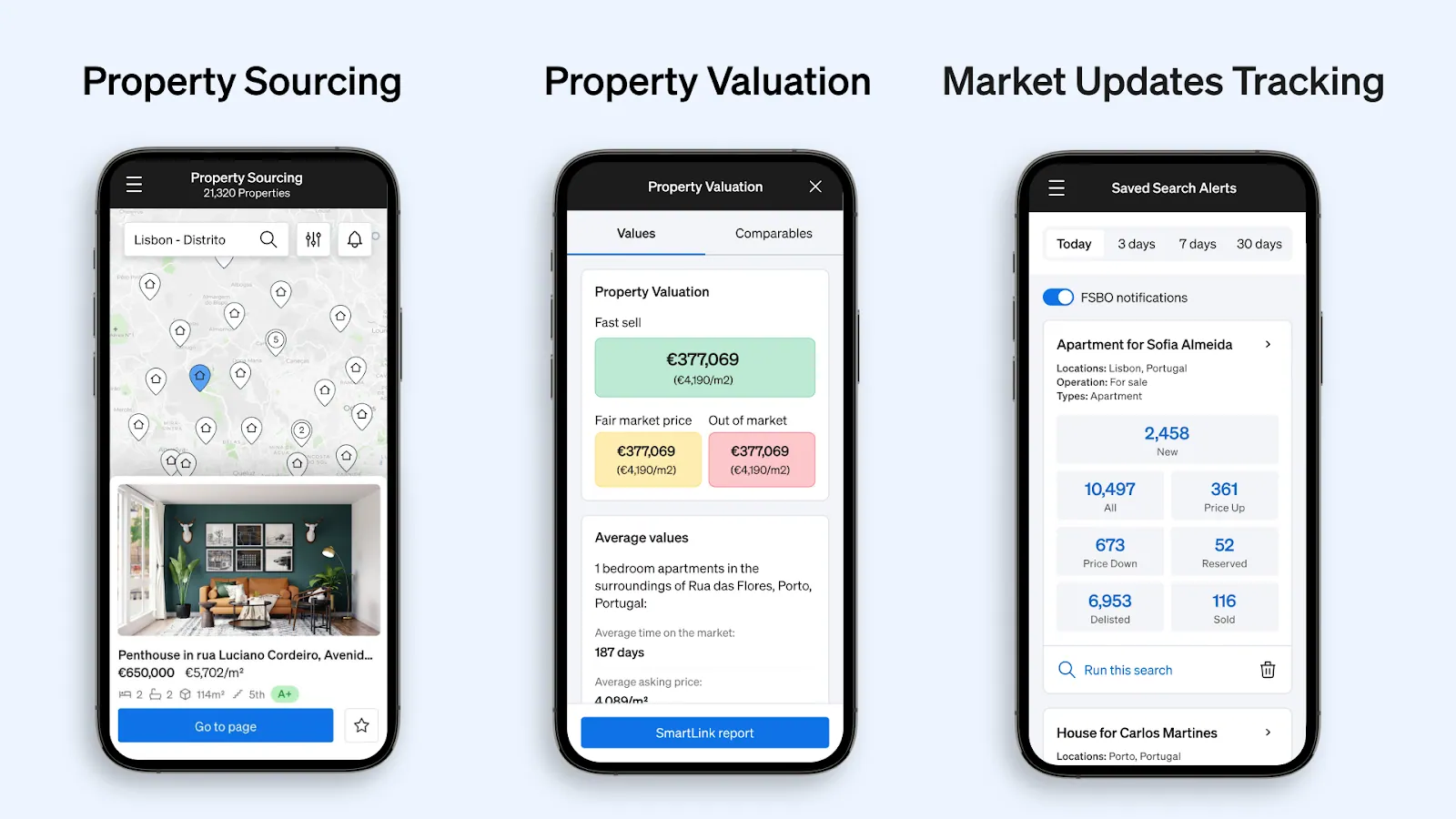
- Property Sourcing Users can source properties quickly, with details available in the Property Sourcing API documentation, thanks to CASAFARI’s fast and reliable API response times – a critical factor for mobile performance. The mobile app enables users to find properties for sale or rent across all geographies covered by CASAFARI’s data.
- Property Valuation The platform provides instant estimated property values for agents and their clients, supporting better decision-making during property visits. With the convenient Casafari app, agents and decision-makers can easily compare properties based on their goals – whether for commercial or residential deals. Casafari’s data empowers both.
- Market Updates Tracking The property data app keeps clients constantly updated with market changes, including historical data and property updates, directly on their smartphones. It’s easy to take your phone out of your pocket and quickly check the changes that happened during the day, month, or even several months.
Target Audience
Currently, the app focuses on residential and commercial properties, mirroring the web-based product. It serves as a fully self-contained version of the platform.
The app primarily serves B2B clients, such as real estate agencies and companies with established contracts. However, it also accommodates B2C users, including private individuals who search properties for personal use.
Technology Stack & Integration
Aside from the Casafari API, the team required programming expertise for integration.
No additional third-party tools were needed – the API alone covered all intended real estate API use cases without technical blockers.
Impact
By fully integrating Casafari API into their mobile application, Casafari mobile App has:
- Delivered fast, accurate, and mobile-friendly market data that could help users in source properties.
- Supported agents’ mobility during client meetings and property visits.
- Created a seamless extension of their web platform for users who need market intelligence in their pocket.
Quote from the Team:
“Casafari API covers all the cases we needed. It’s fast, reliable, and works perfectly for mobile – our clients can now check the market from anywhere.”
How straightforward was the CASAFARI API integration?
Smooth Collaboration and Fast Resolution with Property Data API.
From the very beginning, the integration process between CASAFARI App and Casafari API was marked by clear communication and quick problem-solving.
“Like other Casafari API users, we can reach the API support team via Slack or email. Everything gets fixed as quick as possible,” said the app development team.
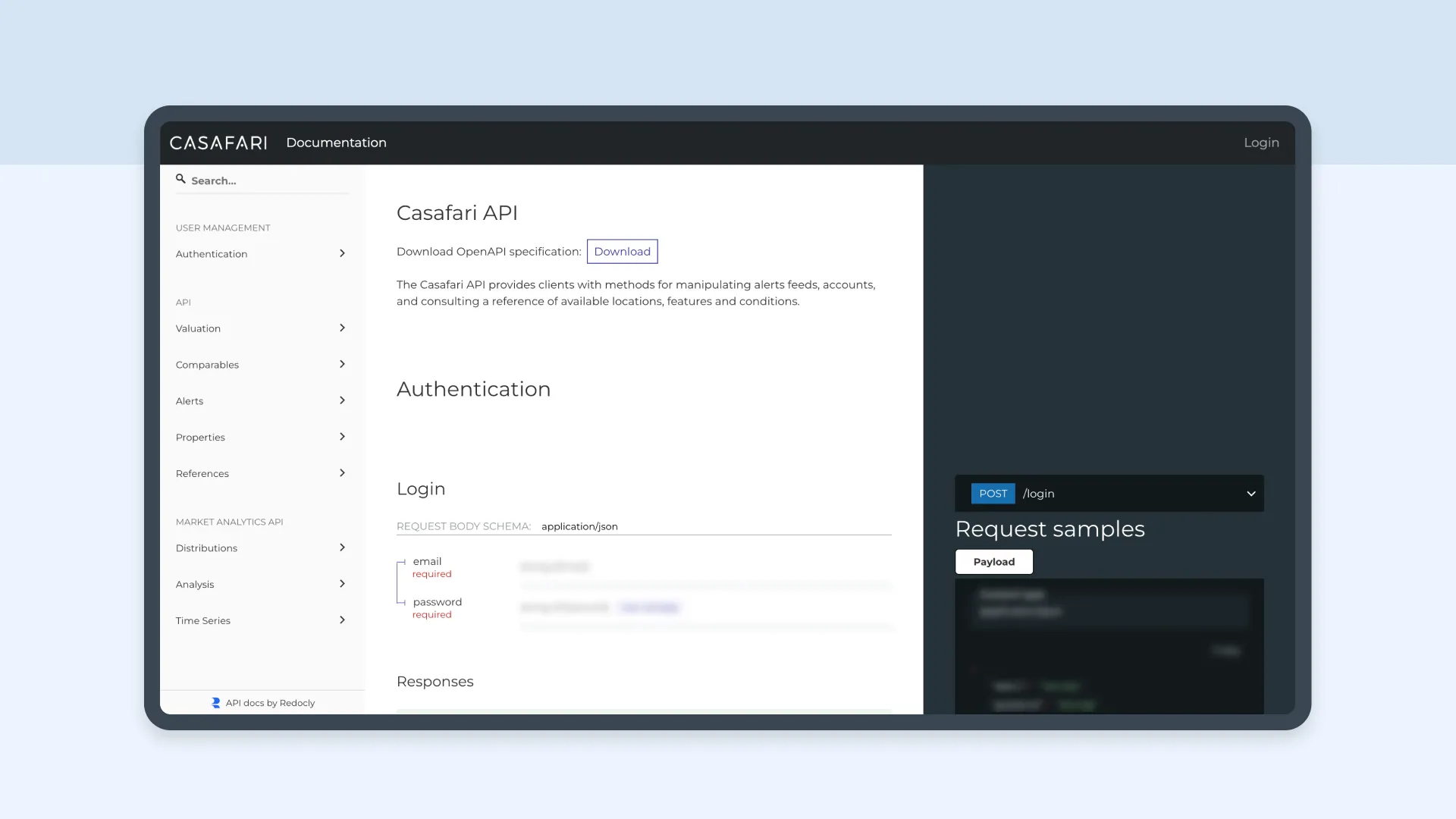
Thanks to well-structured API documentation and ongoing support, the developers found the integration straightforward and efficient.
Overall Technical Experience
- Integration difficulty: Low.
- Documentation quality: High – “always enough” for development needs.
- Response speed from Casafari team: Fast and effective.
- Conditions of usage: the price scales with increasing volumes data.
“We don’t have major blockers. Casafari API covers all our essential needs, and the integration process was smooth. So it’s the best real estate API,” concluded the app development team.
Which CASAFARI API endpoints and data fields power the mobile app?
API Features in Use
The mobile app is built to leverage almost the full capabilities of the Casafari API real estate – an estimated 80–85% of all available endpoints.
Key API integrations include:
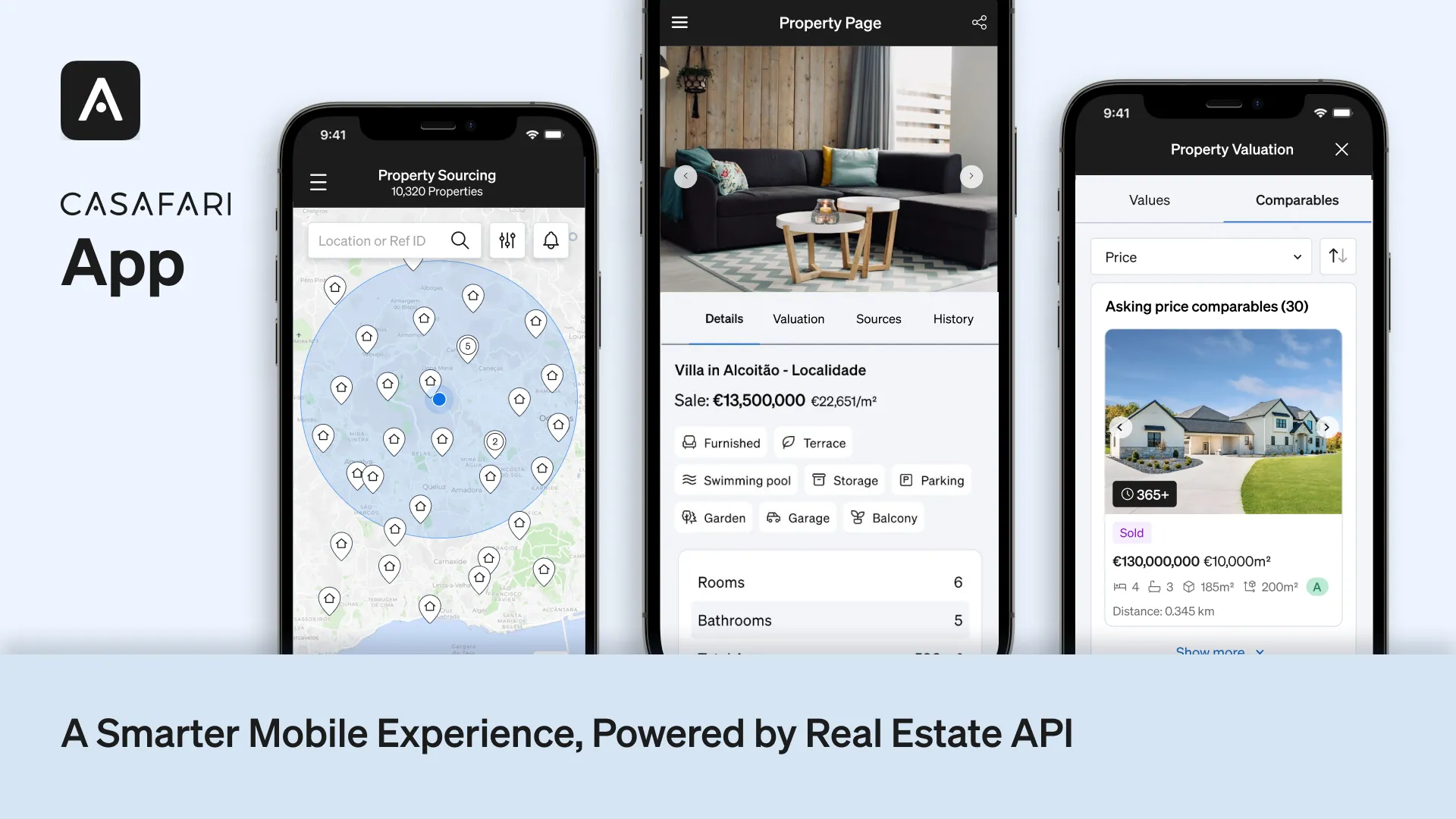
- Property Sourcing on Maps – aggregated counters, map points, and detailed property listings.
- Property Details – including property history, listing history, and source information.
- Property Valuation – available, though used less frequently in the mobile app compared to the web platform.
- Saved Search Alerts – a core feature for mobile, allowing users to track new properties and updates in real time.
- Favourites Management on mobile side – creating folders, saving properties, and organising data.
- Cadastral Data for Spain – crucial for Spanish market operations, providing official property information, comparables.
The mobile app brings the full Casafari experience to your pocket. Just like on the web, users can explore properties listed by both FSBOs and agencies. What makes it stand out is the ability to access transparent data on every property type – helping you make smarter decisions.
Most-Used Data Fields
Casafari API provides access to a vast amount of property data. However, in many use cases only a subset of fields is actively required. In the mobile app, for example, around 70% of property data API fields are used regularly. The key challenge is selecting the right fields – those most relevant to end-users while ensuring quick and efficient property searches.
Critical Fields Prioritised After User Behaviour Analysis:
- Coordinates & Location Data – essential for map views, geolocation, and neighbourhood insights.
- Asking price ranges – a core factor in property decisions and comparisons.
- Filter-Related Fields – property type, size, and other attributes that enable efficient search and refinement.
- Asking price and status history & Source Information – highly valued by agents for verifying time on the market, listing origins, and tracking all property status and asking price changes.
Optimising Data Delivery
With Casafari API, you only get the fields you truly need. This means faster query responses, lighter payloads, and smoother integrations. By reducing unused fields, Casafari API helps you speed up searches and optimise performance. And because every business is different, customizable field selection lets portals, agencies, and developers focus on exactly the data that drives their success.
Location Search & Coordinates Integration
Powered by Casafari’s API, the app delivers highly accurate search results and offers multiple ways to find the right property:
- Search around current GPS location – popular for on-the-go discovery, especially for agents visiting neighborhoods.
- Search by address, city, district.
- Map movement.
- Draw custom boundaries on a map – users can define their own search areas.
The integration process is straightforward. The app retrieves GPS coordinates from the device, sends them to the Casafari API, and returns properties within a specified radius. Users can also search by address, city, or district: the app queries Casafari API with a text input, retrieves a list of matching locations, and then sends the selected location to the API. For map interactions – such as moving the map or setting custom boundaries – the app simply sends the coordinates of the selected area to the API to deliver accurate property results.
Typeahead Search and Allowed Locations
The mobile app works in all regions covered by Casafari API data:
- Portugal
- Spain
- Italy
- Germany
- France (including overseas territories)
- Switzerland
- Greece
- Austria
- Belgium
- Luxembourg
- Monaco
- United Arab Emirates
- Andorra
- Poland
- San Marino
It uses Casafari’s typeahead endpoint to suggest locations as you type, giving every user a tailored experience.
- Login & Access: When logging in, the app loads the list of available countries for that user.
- Accurate Results: All API requests then include the selected country codes to ensure precise results. While some fields may vary depending on the country, 95% of Casafari endpoints are standardized, making integration simple and consistent.
Currently, the app operates at the country level. This means that even if a user is authorized for a single city, searches still run at the broader country level.
Since most users work in a single market, the app only allows one active country at a time. Switching is fast and easy through a dedicated settings page.
How does the app combine listing data with official closing prices?
What is an API used for in real estate?
When building a mobile app for property search, the goal was clear: make it fast, simple, and useful for everyday users. To achieve this, the team had to balance rich data with an easy-to-use interface.
Instead of overwhelming users with too many niche filters like “duplex” or “studio,” the app groups listings into broad categories – apartments, houses, plots – while still giving the option to apply essential filters such as “private seller.”
For valuations, the app combines two types of data:
- General data – detailed property data API with photos, specs, and flexible filtering options.
- Transactional data – actual, recorded closing prices from official sources in Italy, Spain, and France (DVF).
For accurate property valuations, the app blends rich property details with verified closing prices from official sources in Italy, Spain, and France. Even though transactional data is limited to core fields like price, photos, bedrooms, and location, it delivers trust and transparency – a major competitive edge, since most platforms don’t provide access to real transaction records.
What were the outcomes of building the app on the CASAFARI API?
Mobile app outcomes:
- Higher competitiveness: Cadastral information, transactional data comparables, and property history gave the app unique market value.
- Improved alerts: Instant push notifications provide fresh market updates, unlike daily digest systems. Users can also set alerts for areas or add properties to “Favourites” folders to track changes – though push notifications for favourites remain an opportunity.
- User satisfaction: Screen recording analysis confirmed that broad grouping of property types works well; no demand emerged for hyper-granular type filters.
Future Opportunities:
- Enhanced transactional data: Adding more details from real estate APIs (when available) would give users deeper insights.
- Favourites notifications: Users could subscribe to property updates (like price drops) for both rentals and sales.
- Historical listings: While the app highlights fresh, active listings, past data could support market analysis and negotiation strategies.
Key Takeaways:
- The CASAFARI mobile app is powered by our Real Estate Data API, which drives almost all features.
- Integration of Spain’s cadastral data sets us apart in that market.
- Alerts and favourites are key to boosting user engagement.
- API usage is scalable, so costs grow with the data you use.
By combining rich property data API, real transactional records, and instant alerts, the team created a mobile experience that’s both streamlined and powerful – with plenty of room to grow through data-driven innovation.
Build your product with CASAFARI’s Real Estate Data API. Sign in to get started on the CASAFARI platform today.
If you would rather see the result than read about it, the CASAFARI Real Estate App page shows what agents get in their pocket: property search on the map, valuations and the history of every listing.
Frequently asked questions
Which real estate features can developers build with the CASAFARI API?
Developers can build map-based Property Sourcing featuring custom boundaries, GPS location search, and radius filtering. The CASAFARI API also powers instant property valuations through Comparables, property and listing history tracking, and favourites management. Additionally, developers operating in Spain can integrate official Spanish cadastral data for comprehensive property records.
How much of the CASAFARI API does the mobile app use?
The CASAFARI mobile app utilizes 80–85% of all available API endpoints to power its mobile-first features. It regularly requests around 70% of data fields, selecting specific parameters such as coordinates, asking price ranges, and status history. This targeted data fetching keeps payloads light and ensures rapid response times on mobile devices.
Does the CASAFARI API include both asking prices and closing prices?
Yes, the CASAFARI API provides both listing data and official transactional records. It tracks asking prices, asking price ranges, and historical price adjustments across indexed property listings. In key markets like France, Spain, and Italy, it also delivers official closing prices from public databases such as DVF for precise valuations.
How does location search work in the CASAFARI API?
Location search in the CASAFARI API supports device GPS coordinates for radius queries, map bounding boxes, and custom-drawn polygon boundaries. It also features a typeahead endpoint via Location Lookup to resolve addresses, cities, and districts seamlessly. Around 95% of CASAFARI endpoints are standardized across supported countries, simplifying geographical integrations.
How can a development team start building with the CASAFARI API?
Development teams can explore the technical documentation at developers.casafari.com to review endpoints and payload structures. To begin integration, developers sign in at platform.casafari.com/signin to create an account and manage API keys. Usage is flexible and billed using tokens that scale as API data volume increases.