
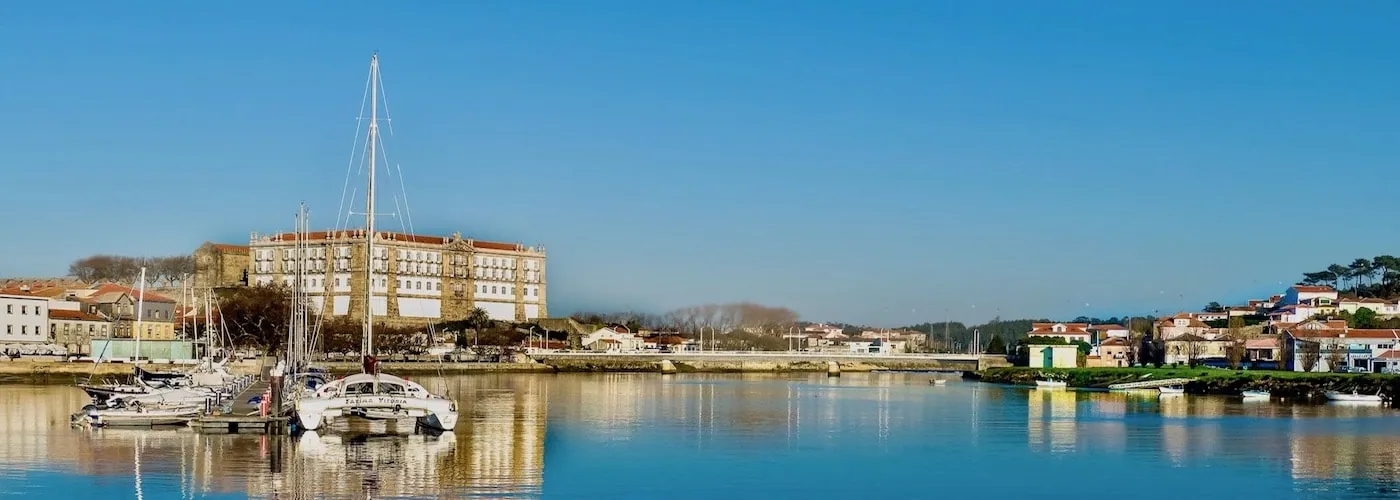
Vila do Conde offers a compelling blend of historic maritime heritage, 18 kilometres of Atlantic coastline, and direct Metro do Porto links to the city centre. Property buyers and investors exploring the Porto District real estate guide will find that average apartment asking prices reached €2,965/m² in Q3 2026 according to CASAFARI Area Insights, while asking rents stood at €11.9/m²/month, making this northern coastal municipality an increasingly sought-after alternative to central Porto.
Where is Vila do Conde and how is it connected to Porto?
Positioned at the mouth of the Ave River on the northern coast of the Porto District, Vila do Conde has evolved into a thriving residential alternative to central Porto and Foz do Douro. The municipality, home to 86,245 residents according to the INE and PORDATA municipal population statistics for Vila do Conde (2025 official estimate updated in June 2026), balances small-town tranquillity with metropolitan connectivity.
Daily commuting is straightforward thanks to Metro do Porto Line B (Red Line). Trains depart from Vila do Conde station and reach Trindade in central Porto in 41 minutes on the Express service, or 48 minutes on the stopping service, running every 15 to 20 minutes at peak times. International travellers and frequent flyers can reach Francisco Sá Carneiro Airport in roughly 30 to 35 minutes of rail time by taking Line B to Verdes and transferring for two stops on Line E, complemented by direct access via the A28 motorway.
What is daily life like in Vila do Conde?
The town’s historic core is anchored by two National Monuments designated in 1910: the late-Gothic and Manueline Igreja Matriz, consecrated in 1518 with a portal attributed to João de Castilho, and the Santa Clara Aqueduct, completed between 1705 and 1714 as the second-longest aqueduct in Portugal. This historic gravitas contrasts with the relaxed, walkable rhythm of the Ave riverbank and the bustling Friday market.
Along the Atlantic seaboard, the municipality features approximately 18 kilometres of coastline, including 6 kilometres of continuous urban sandy beach by the town centre. For the 2026 bathing season, the Câmara Municipal de Vila do Conde 2026 Blue Flag beach announcement confirms five Blue Flag awards: Frente Urbana Norte, Frente Urbana Sul, Mindelo, Vila Chã and Labruge. Cultural life peaks in summer with the Festas de São João in June, the international short-film festival Curtas Vila do Conde at the Teatro Municipal in July, and the Feira Nacional de Artesanato at Jardim Júlio Graça in August.
What types of housing exist in Vila do Conde and who is buying?
Housing stock varies considerably across the municipality’s micro-locations. Oceanfront apartments and contemporary condominium developments line Avenida Brasil and the Caxinas promenade. Restored historic townhouses cluster near the Igreja Matriz and the river, while detached villas and low-density coastal homes extend south through Azurara, Árvore, Mindelo, Vila Chã and Labruge.
Market demand is driven by three primary groups: Greater Porto families trading city-centre apartments for more generous living space by the sea within easy reach of the Metro; international remote workers and retirees seeking an authentic Portuguese town with year-round vitality; and buy-to-let investors targeting medium-term professional tenants as well as summer holidaymakers.
How are property prices and rents performing in Vila do Conde in 2026?
Market metrics highlight sustained demand across the concelho. According to CASAFARI Area Insights (location id 3062, queried 25 October 2026), the average asking price for apartments for sale in Vila do Conde reached €2,965/m² in Q3 2026, marking a 14.6% year-on-year increase from €2,586/m² in Q3 2025. These figures represent asking prices from indexed listings with outliers excluded, rather than closing prices.
On the rental side, CASAFARI Area Insights recorded an average asking rent for apartments of €11.9/m² per month in Q3 2026, up 9.2% year on year from €10.9/m² in Q3 2025. This rental growth aligns with broader European trends explored in our 2026 analysis of gross rental yields across European cities.
When comparing asking levels with official transaction records from the INE local housing closing-price statistics for Vila do Conde, the median closing sale price for family housing stood at €2,262/m² over the 12 months ending Q1 2026 (€2,230/m² for new builds), representing a 14.5% year-on-year increase. The margin between INE’s median closing price across all housing types and CASAFARI’s apartment asking price reflects standard vendor negotiation buffers and the premium commanded by newly listed coastal developments.
What taxes, residency rules and short-let licences apply to buyers in 2026?
Navigating the Portuguese regulatory environment requires an understanding of updated fiscal frameworks. The classic Non-Habitual Resident (NHR) regime is closed to new applicants, having been replaced by the IFICI regime (“NHR 2.0”), which grants a 20% flat IRS rate for 10 years on qualifying employment, research or startup roles, alongside exemptions on most foreign-source income for eligible new residents. Meanwhile, the Golden Visa (ARI) route no longer applies to real estate acquisitions following Law 56/2023, as detailed in the 2026 overview of Portugal’s IFICI tax regime and Golden Visa rules.
Property acquisition costs include a flat 0.8% Stamp Duty and progressive Property Transfer Tax (IMT) rates for primary residences in mainland Portugal. Under the 2026 IMT brackets and IMT Jovem exemption thresholds, buyers aged 35 or under enjoy full IMT and Stamp Duty exemption on first homes up to €330,539, while non-resident buyers face a flat 7.5% IMT rate. For annual holding taxes, Vila do Conde applies the statutory minimum urban Municipal Property Tax (IMI) rate of 0.30%.
For investors eyeing short-term rentals, the regulatory outlook is favourable. As outlined in the Vila do Conde municipal directory for Alojamento Local registration, new Alojamento Local (AL) registrations are permitted across the municipality under Decree-Law 76/2024. With approximately 400 registered units—well below the 1,000-unit threshold that triggers mandatory containment—there are no municipal bans or restricted zones, and registrations are processed via prior communication on the ePortugal portal subject to a 60-day review period.
How can buyers, investors and agents analyse Vila do Conde with CASAFARI?
Real estate professionals, private investors and prospective buyers can monitor hyper-local market dynamics using CASAFARI Area Insights and our property valuation and comparative market study tool to benchmark asking prices, inventory shifts and historical trends down to the parish level.
To identify off-market opportunities and track active inventory, CASAFARI Property Sourcing aggregates and deduplicates listings across portals and agencies while surfacing price histories and For-Sale-By-Owner leads. Read our complete guide to buying property in Portugal for practical steps on the promissory contract and notary deed, and sign in to the CASAFARI platform Console to begin running comparative market analyses immediately.
Frequently asked questions
How long does it take to travel from Vila do Conde to Porto and the airport?
Metro do Porto Line B (Red Line) runs from Vila do Conde station to Trindade in central Porto in 41 minutes on the Express service and 48 minutes on the regular service, with departures every 15 to 20 minutes at peak times. To reach Francisco Sá Carneiro Airport, passengers take Line B to Verdes and transfer for two stops on Line E, requiring approximately 30 to 35 minutes of rail time plus the transfer. By car via the A28 motorway, the airport is roughly 15 to 20 minutes away and central Porto about 30 minutes outside peak traffic hours.
Can you get an Alojamento Local (short-let) licence in Vila do Conde in 2026?
Yes, new Alojamento Local registrations are fully permitted across the entire municipality of Vila do Conde. Following Decree-Law 76/2024, which returned regulatory authority to local councils, Vila do Conde has introduced no containment zones or municipal bans because its total of approximately 400 registered units sits well below the statutory 1,000-unit threshold. Owners submit a prior communication via the ePortugal portal, which is subject to a standard 60-day municipal review period.
Does buying property in Vila do Conde qualify for a Golden Visa or NHR tax status?
No, real estate investments in Portugal no longer qualify for the Golden Visa following Law 56/2023, and the original Non-Habitual Resident (NHR) tax regime is closed to new applicants. However, new tax residents in 2026 who have not been taxed in Portugal in the preceding five years and work in qualifying scientific, high-value or startup roles can apply for the IFICI (“NHR 2.0”) regime. This grants a 20% flat IRS rate on local earned income for 10 years along with exemptions on most non-pension foreign income.
What are the property purchase taxes and annual IMI rates in Vila do Conde in 2026?
Buyers in Vila do Conde pay a 0.8% Stamp Duty alongside Property Transfer Tax (IMT), which scales progressively up to 8% for primary residences, while buyers aged 35 or under benefit from full IMT and Stamp Duty exemption up to €330,539 on their first home under IMT Jovem. Non-resident buyers are subject to a flat 7.5% IMT rate under Decree-Law 97/2026. Following acquisition, urban properties benefit from the municipal property tax (IMI) set at the statutory minimum rate of 0.30% of the tax value for 2026.
Which areas of Vila do Conde are most popular for property buyers?
Property stock varies significantly across the municipality, catering to diverse preferences. Avenida Brasil and the Caxinas promenade are favoured for their oceanfront apartments and proximity to the urban centre. For those seeking more space, the southern coastal parishes of Azurara, Árvore, Mindelo, Vila Chã and Labruge offer a mix of detached villas and lower-density housing.
What kind of rental demand should buy-to-let investors expect?
Investors in Vila do Conde benefit from a multifaceted market with consistent year-round demand. Property owners typically target two primary groups: medium-term professional tenants looking for a better quality of life near the coast, and summer holidaymakers attracted to the town’s extensive 18-kilometre Atlantic coastline. This dual-demand profile, supported by easy Metro links to Porto, helps sustain local rental growth.