
NOVA ESQUERRA DE L’EIXAMPLE PROPERTY GUIDE
Geometrically perfect streets, green open spaces, and tranquillity
La Nova Esquerra de l’Eixample spans the western edge of Cerdà’s grid in Barcelona, bounded by Sants station, Plaça d’Espanya, and Avinguda de Josep Tarradellas. In Q3 2026, CASAFARI Area Insights recorded an average asking price of €5,928/m² from listings indexed by CASAFARI (outliers excluded)—up 5.6% year on year—alongside an average asking rent of €36.0/m²/month, offering international buyers a vibrant, well-connected residential neighbourhood just minutes from the city centre.
Where is La Nova Esquerra de l’Eixample and how is it connected?
La Nova Esquerra de l’Eixample is defined by strict boundaries within the Eixample district, as detailed in our Eixample district property guide. It is enclosed by Carrer de Tarragona to the south-west, Avinguda de Josep Tarradellas and Avinguda de Sarrià to the north-west (touching Plaça de Francesc Macià), Carrer del Comte d’Urgell to the north-east, and Gran Via de les Corts Catalanes down to Plaça d’Espanya to the south-east.
The neighbourhood borders Sants-Montjuïc to the south-west, Les Corts and Sarrià-Sant Gervasi to the north-west, and L’Antiga Esquerra de l’Eixample across Comte d’Urgell. Commuters and international buyers prize its exceptional transport infrastructure: Barcelona-Sants sits directly on its western flank, offering AVE high-speed rail links to Madrid and France, alongside Rodalies R2 Nord trains reaching Barcelona-El Prat Airport Terminal 2 in 19 minutes. Additionally, Plaça d’Espanya provides FGC and Aerobús services, while seven metro stations—Entença, Rocafort, Tarragona, Espanya, Sants Estació, Urgell, and Hospital Clínic—serve lines L1, L3, and L5.
What is everyday life like in La Nova Esquerra de l’Eixample?
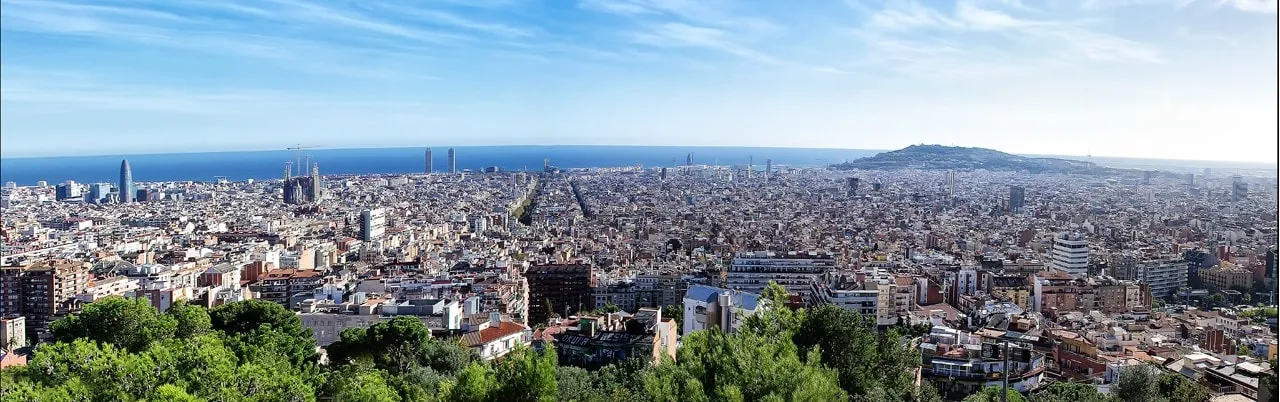
Home to 59,117 residents across 1.34 square kilometres according to the Ajuntament de Barcelona 2026 municipal register, La Nova Esquerra offers a dense, authentic residential environment situated just outside the city’s heavy tourist circuit. Cerdà’s iconic octagonal blocks and wide, tree-lined pavements maintain a sense of proportion and calm.
Prominent civic spaces anchor the neighbourhood, including the Parc de Joan Miró featuring Joan Miró’s 22-metre Dona i Ocell sculpture and the Biblioteca Joan Miró. The historic Escola Industrial campus on Carrer del Comte d’Urgell provides public sports facilities, university faculties, and gardens within a former 19th-century brick complex. Cultural landmarks such as the Modernista Casa Golferichs on Gran Via and the retail hub of Arenas de Barcelona at Plaça d’Espanya complement a thriving local dining scene, which includes Michelin-listed Nectari at Carrer de València 28, Senyor Vermut at Carrer de Provença 85, and Tastem at Carrer de Provença 88.
Housing stock and buyer profile: what kind of homes will you find?
While the older core of the Eixample features ornate late-19th-century fincas regias, La Nova Esquerra was largely developed between the 1930s and the 1970s. This era produced solid concrete-and-brick residential blocks equipped with lifts, concierge services, underground parking—a notable luxury compared to the older Eixample—and practical family floor plans measuring between 85 and 120 square metres with three to four bedrooms. Sunny upper-floor penthouses with views toward Montjuïc or Tibidabo are particularly sought after.
The buyer profile is diverse, comprising Catalan families trading up for space and school catchments, professionals working near Francesc Macià or commuting via Sants, and international buyers seeking a primary residence or enduring long-term asset, often reviewing our guide to the Spanish property purchase contract and escritura before completing transactions.
Nova Esquerra de l’Eixample property prices and rental market in 2026
Market metrics for the neighbourhood demonstrate steady appreciation across both sales and lettings. According to CASAFARI Area Insights, the average asking price for apartments for sale in La Nova Esquerra de l’Eixample reached €5,928/m² in Q3 2026, marking a 5.6% increase year on year from €5,616/m² in Q3 2025. In the rental sector, CASAFARI Area Insights recorded an average asking rent of €36.0/m²/month in Q3 2026, up 17.3% year on year from €30.7/m²/month in Q3 2025, reflecting acute supply compression.
These asking figures contrast with official closing prices published by the Ajuntament de Barcelona and the Col·legi de Registradors for full-year 2025. Registered Land Registry sales closed at an average of €5,465/m²—comprising €5,621/m² for new builds and €5,373/m² for resales—with an average transaction value of €432,325 per flat. Meanwhile, notarial records for multi-family flats recorded an average closing price of €5,311/m².
Taxes, residency and rental rules every buyer must know in 2026
Property acquisitions in Catalonia are subject to progressive Property Transfer Tax (ITP) rates established under Decree-Law 5/2025. For resale homes, rates are 10% up to €600,000, 11% between €600,000 and €900,000, 12% between €900,000 and €1,500,000, and 13% for amounts exceeding €1,500,000. Large property holders owning five or more homes in a stressed zone or purchasers of entire residential buildings face a flat 20% rate, whereas eligible buyers under 35, large families, and individuals with disabilities benefit from a reduced 5% rate. Stamp duty (AJD) is levied at a general rate of 1.5%.
Non-EU buyers should note that Spain’s real estate Golden Visa was formally abolished on 3 April 2025 under Organic Law 1/2025, as detailed in the Ajuntament de Barcelona official closing-price statistics and official state bulletins. Buyers now utilize standard non-lucrative, digital nomad, or professional residency pathways. In the rental market, zero new tourist apartment licences (HUT) are issued under the PEUAT plan, and all existing HUT licences in Barcelona are scheduled to expire in November 2028 under Decree-Law 3/2023. Furthermore, under Catalonia Law 11/2025, seasonal lets exceeding 31 days for work, study, or medical purposes, as well as room-by-room rentals, are bound by stressed-zone rent caps and mandatory Incasòl documentation.
How to analyse and source property in La Nova Esquerra de l’Eixample with CASAFARI
Professional investors, agents, and private buyers rely on robust data infrastructure to navigate Barcelona’s micro-markets. CASAFARI Area Insights allows market participants to track asking-price trends, supply shifts, and days on market at street level.
By deploying CASAFARI Property Sourcing, users can deduplicate listings aggregated from thousands of agencies and portals to uncover complete historical records, including price adjustments and delistings. Pairing these active listings with the property valuation and market study tool enables accurate benchmarking against official closing prices. To explore live listings, comparables, and market analytics in Barcelona, sign in to the CASAFARI platform.
Frequently asked questions
Is La Nova Esquerra de l’Eixample a good area to live and buy property in Barcelona?
Yes, it combines the traditional grid layout, broad pavements, and central services of the Eixample district with a quieter, predominantly residential atmosphere. Home to 59,117 residents according to municipal records, it features prominent green and civic hubs like the Parc de Joan Miró and Escola Industrial, alongside direct high-speed rail and airport connections at Barcelona-Sants.
What is the difference between L’Antiga Esquerra and La Nova Esquerra de l’Eixample?
Carrer del Comte d’Urgell divides the two neighbourhoods. L’Antiga Esquerra, closer to Passeig de Gràcia, contains a higher density of late-19th-century fincas regias and commercial activity, whereas La Nova Esquerra extends westward to Sants and Plaça d’Espanya, offering more mid-20th-century buildings equipped with lifts and underground parking, wider open spaces, and immediate proximity to Sants station.
What taxes apply when buying a resale flat in La Nova Esquerra de l’Eixample in 2026?
Under Catalonia’s Decree-Law 5/2025, buyers of resale homes pay progressive Property Transfer Tax (ITP) ranging from 10% on the first €600,000 up to 13% for amounts exceeding €1,500,000. Large property holders owning five or more homes in a stressed zone or purchasers of entire residential buildings face a flat 20% rate, while eligible buyers under 35 benefit from a reduced 5% rate.
Can you buy an apartment in La Nova Esquerra de l’Eixample for short-term tourist or seasonal lets?
No new short-term tourist apartment licences (HUT) are granted under Barcelona’s PEUAT plan, and all existing HUT licences in the city are scheduled to expire by November 2028. Additionally, under Catalonia Law 11/2025, seasonal lets exceeding 31 days for professional, educational, or medical reasons and room rentals are subject to the same strict stressed-zone rent caps as long-term residential leases.
What are the main transport and connectivity benefits for residents of La Nova Esquerra de l’Eixample?
The area is exceptionally well-connected, with Barcelona-Sants station providing high-speed rail links to Madrid and France, and direct trains reaching Barcelona-El Prat Airport Terminal 2 in 19 minutes. Residents also benefit from extensive public transit, including the Aerobús and FGC services at Plaça d’Espanya, alongside seven metro stations serving lines L1, L3, and L5.
What cultural and civic landmarks are found in La Nova Esquerra de l’Eixample?
The neighbourhood is anchored by major spaces such as the Parc de Joan Miró, home to the artist’s iconic 22-metre Dona i Ocell sculpture, and the historic Escola Industrial campus with its public sports facilities and gardens. Additionally, residents have access to retail hubs like the Arenas de Barcelona and a diverse local dining scene featuring several highly regarded restaurants.