
Buying property in El Barri Gòtic, Barcelona, requires balancing historic architectural appeal with rigorous regulatory due diligence. In Q3 2026, CASAFARI Area Insights recorded an average asking price of €5,458/m² (+1.2% year on year) and an asking rent of €28.3/m²/month (+5.2% year on year) for apartments for sale (location id 10547, queried October 2026, outliers excluded), contrasted against official registered closing prices of €4,431/m² from the Land Registry.
Where El Barri Gòtic sits in Ciutat Vella and how the borders are changing
El Barri Gòtic forms the historic heart of the Ciutat Vella property guide, bounded by La Rambla to the southwest, the newly pedestrian-friendly Via Laietana to the northeast, Plaça de Catalunya to the north, and Passeig de Colom and Port Vell to the southeast. The district’s perimeter arteries have undergone significant urban transformations. Via Laietana’s €38.16 million overhaul completed in June 2025 introduced 4.05-metre pavements, a segregated cycle lane, and camera-restricted uphill traffic, reducing noise and exhaust for apartments along the edge. Meanwhile, La Rambla’s transformation finished the Gòtic side in 2025, reopened the Raval-side seaward lane on 29 September 2026 according to the Ajuntament de Barcelona, and is scheduled for full completion in February 2027. Connectivity is exceptional, with Metro lines L3 (Catalunya, Liceu, Drassanes) and L4 (Urquinaona, Jaume I), FGC and Rodalies at Plaça de Catalunya, and a 30 to 35-minute connection to Barcelona-El Prat Airport via the 24-hour Aerobús.
Day-to-day life, architecture and who buys in the Gothic Quarter
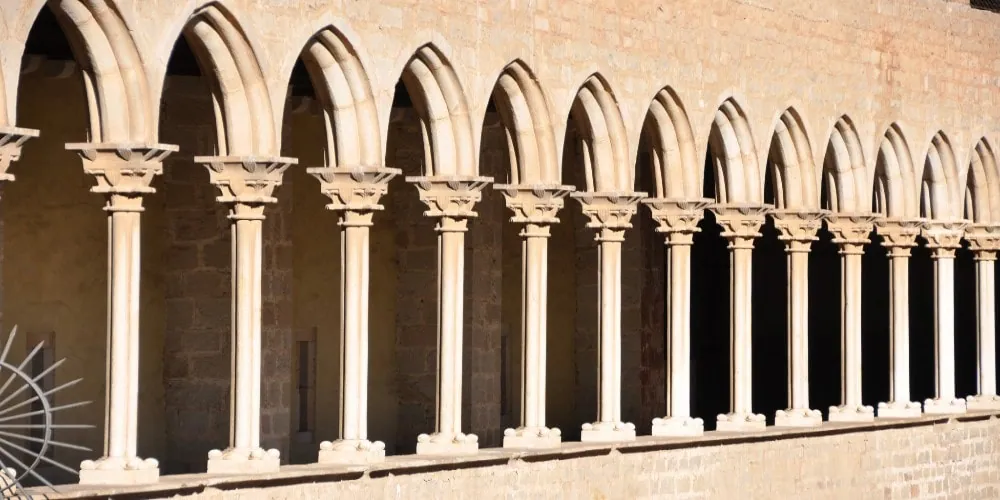
Inside the medieval quarters and Roman walls of Barcino, daily life blends institutional grandeur—such as the Ajuntament and Palau de la Generalitat at Plaça de Sant Jaume and the Cathedral at Plaça de la Seu—with quiet residential squares like Plaça de Sant Felip Neri and Plaça del Duc de Medinaceli. According to the Ajuntament de Barcelona Padró Municipal d’Habitants, El Barri Gòtic holds 27,312 registered inhabitants as of 2025–2026, of whom 67.9% hold foreign nationality. Over 80% of buildings pre-date 1940, showcasing authentic Catalan vaulted ceilings (volta catalana), hydraulic mosaic tiles, wrought-iron balconies, and listed heritage facades. Buyers should note micro-location differences: dark, lower-floor flats on narrow medieval lanes trade at steep discounts compared to sun-lit principals, penthouses with private terraces, or stately fincas regias with lifts on wider perimeter streets like Via Laietana or Passeig de Colom.
Property prices and rents in El Barri Gòtic: asking vs closing figures in 2026
Understanding market values requires examining both active listings and registered transactions. According to CASAFARI Area Insights, the average asking price for apartments for sale in El Barri Gòtic reached €5,458/m² in Q3 2026, marking a 1.2% year-on-year increase from €5,394/m² in Q3 2025 (location id 10547, outliers excluded). These are asking prices derived from active listings. In contrast, official closing data from the Land Registry via the Ajuntament de Barcelona registered property transaction statistics shows second-hand flats closing at an average of €4,431/m² in 2025, with an average registered transaction value of €409,300. This roughly 23% spread between asking and closing prices reflects the premium commanded by turnkey, renovated properties versus unrenovated stock or units lacking lifts. On the rental side, CASAFARI Area Insights recorded an average asking rent of €28.3/m²/month in Q3 2026 (+5.2% YoY from €26.9/m²/month in Q3 2025), whereas INCASÒL deposited lease contracts show an average closing rent of €16.17/m² (€1,195.30/month) in Q1 2026, demonstrating how transactional data shows the cost of overpricing.
Taxes, rent caps, tourist licences and building rules every buyer must check
Acquisitions in Catalonia are governed by stringent tax and urban regulations. Under Decree-Law 5/2025, in force since June 2025, resale residential purchases are subject to progressive Property Transfer Tax (ITP) rates outlined by the Agència Tributària de Catalunya ITP and AJD tax rates: 10% up to €600,000, 11% up to €900,000, 12% up to €1,500,000, and 13% above €1,500,000, alongside a 20% rate for large landlords and whole-building buyers. Regarding short-term rentals, El Barri Gòtic sits in PEUAT Zone 1, where zero new tourist licences (HUT) are issued. Under Catalonia Decree-Law 3/2023, all 10,101 existing HUT licences in Barcelona expire in November 2028 without renewal. Long-term and seasonal rentals are also strictly regulated: Barcelona is a stressed residential market zone, and Catalan Law 11/2025 subjects seasonal lets to the same rent caps unless documented temporary causes are lodged with INCASÒL. Buyers must also navigate the abolition of Spain’s Golden Visa on 3 April 2025 under Organic Law 1/2025 in the Boletín Oficial del Estado, and verify historic building compliance, including second-occupancy habitability certificates, Energy Performance Certificates, and the mandatory 45-year ITE building inspection.
How to analyse and source El Barri Gòtic property with CASAFARI
Navigating a dense historic market like El Barri Gòtic requires granular data to separate marketing aspirations from actual market value. Professionals use CASAFARI Area Insights to track asking price and rent trends across Ciutat Vella sub-districts. To uncover hidden inventory, CASAFARI Property Sourcing deduplicates listings across portals and agencies, revealing true listing histories and multi-agency price variations. When preparing an offer, property valuation and market study tools combine active asking data with closing prices to evaluate historic apartments accurately, taking account of lift access and terrace space. To begin exploring these tools, sign in to CASAFARI platform to explore Barcelona market data and review our detailed guide to the Spanish purchase contract and escritura.
Frequently asked questions
Can you get a tourist licence for an apartment in Barri Gòtic, Barcelona?
No. El Barri Gòtic is inside PEUAT Zone 1 (Ciutat Vella), where new tourist apartment licences and licence replacements are strictly prohibited. Furthermore, under Catalonia’s Decree-Law 3/2023, upheld by Spain’s Constitutional Court in 2025, the Ajuntament de Barcelona will extinguish all existing tourist licences in the city by November 2028.
What are the property purchase taxes (ITP) in Barcelona and Catalonia in 2026?
Since Decree-Law 5/2025 took effect in June 2025, resale residential purchases in Catalonia incur progressive Property Transfer Tax (ITP) rates: 10% up to €600,000, 11% up to €900,000, 12% up to €1,500,000, and 13% above €1,500,000. Large landlords and buyers of entire residential buildings face a 20% rate, while qualifying young buyers purchasing a primary residence enjoy a reduced 5% rate.
Are seasonal rentals and room lets capped in Barri Gòtic?
Yes. Barcelona has been a designated stressed residential market zone since March 2024, and Catalan Law 11/2025 extends rent caps to seasonal leases signed for work, study, medical treatment, or transitional needs. Landlords must lodge documentary proof of the temporary reason with INCASÒL, and for room-by-room rentals, the combined rent of all rooms cannot exceed the regulated cap for the entire apartment.
What technical inspections and certificates do historic buildings in Barri Gòtic require?
Because over 80% of buildings in El Barri Gòtic pre-date 1940, buyers must verify three key documents before signing: the second-occupancy habitability certificate under Decree 141/2012, the Energy Performance Certificate (with heritage exemptions for officially listed monuments), and the Technical Building Inspection under Decree 67/2015. Mandatory for multi-family buildings over 45 years old, the ITE certificate reveals whether the community faces structural repairs.
What should I look for when choosing between different properties in the Gothic Quarter?
Buyers should be aware of significant micro-location differences within the neighbourhood. Darker flats on narrow, historic lanes typically command lower prices, whereas prime, sun-lit apartments, penthouses with private terraces, and stately fincas regias equipped with lifts on wider perimeter streets such as Via Laietana or Passeig de Colom hold a higher market value.
How does the current market perform for investors looking at rental yield?
While CASAFARI Area Insights recorded an average asking rent of €28.3/m²/month in Q3 2026, transactional data from INCASÒL deposits shows a significantly lower average closing rent of €16.17/m²/month in Q1 2026. This notable gap underscores the importance of relying on verified closing data rather than asking prices alone when calculating potential rental returns.